
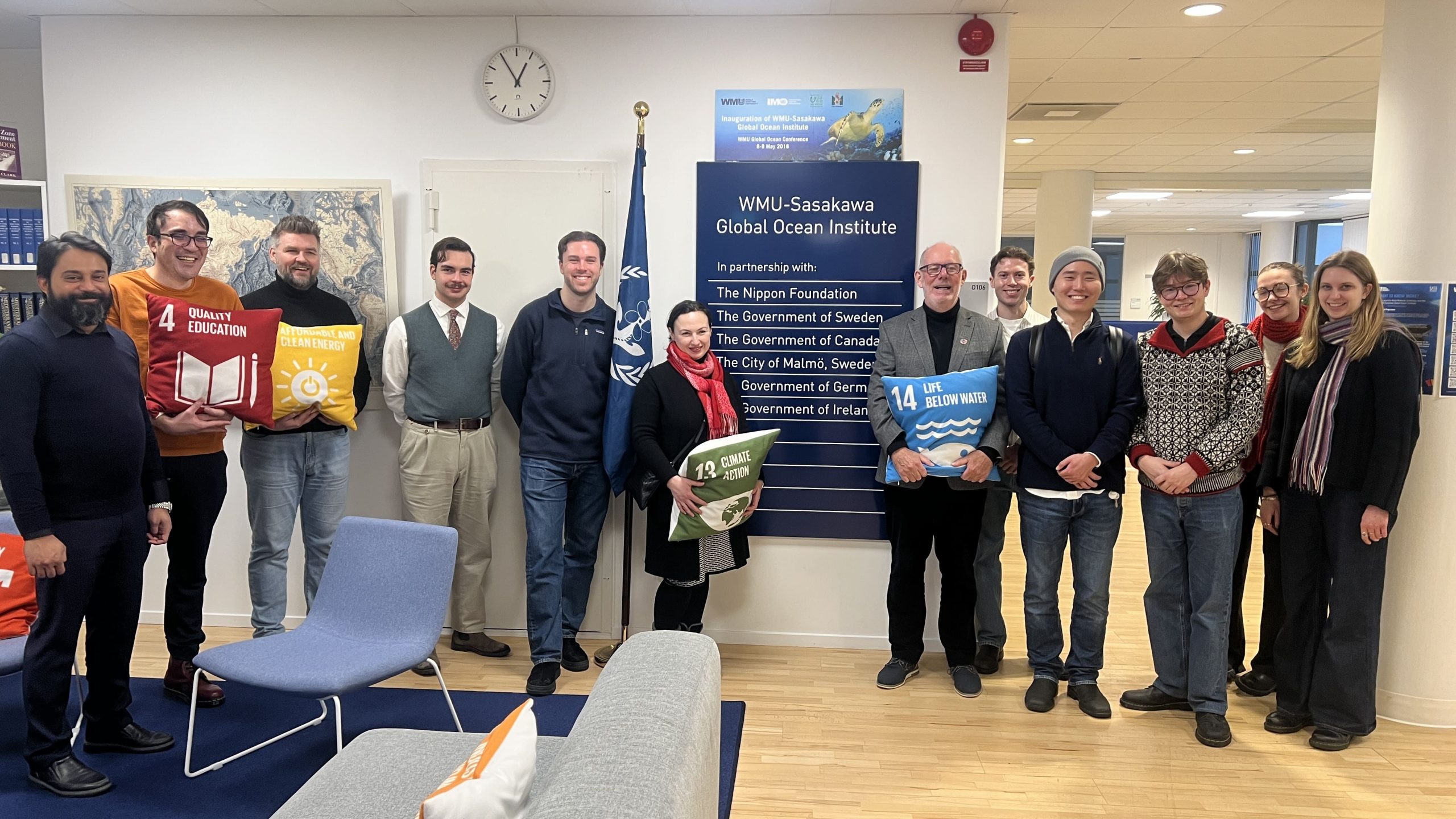
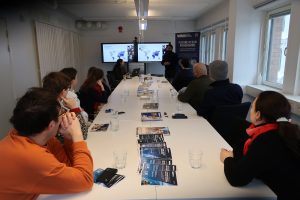
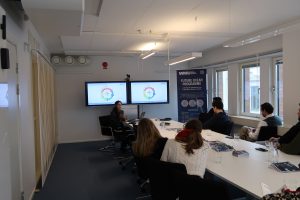
On 6 February 2026, the World Maritime University (WMU)-Sasakawa Global Ocean Institute (GOI) had the honour of welcoming Senior Lecturer, Dr. Olena Bokareva, and a cohort of students from the Maritime and Transport Law programme at Lund University to the World Maritime University in Malmö, Sweden. The visit formed part of the Institute’s ongoing engagement with academic partners and its commitment to fostering interdisciplinary dialogue between ocean science, policy, and law.
lund university field trip
maritime and transport law programme
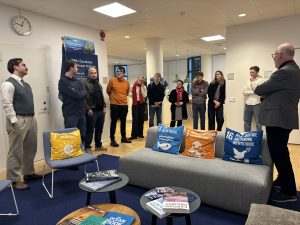
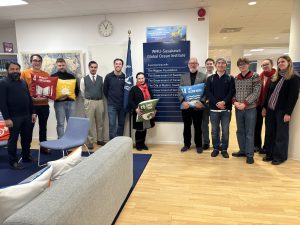
The thematic focus of the visit was ocean observation technologies and their implications for governance and legal frameworks. Presentations highlighted major research initiatives, including the Future Ocean Programme and related international projects that advance the use of ocean data to support climate action, sustainable resource management, and evidence-based policymaking. These discussions illustrated how scientific and technological developments are increasingly influencing regulatory approaches, compliance mechanisms, and international cooperation in the marine domain.
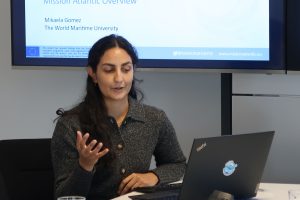
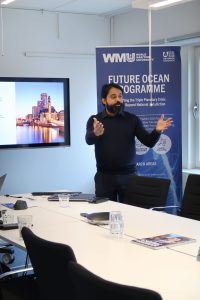
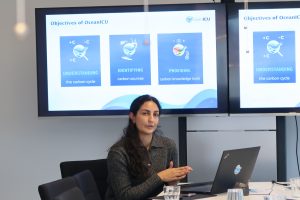
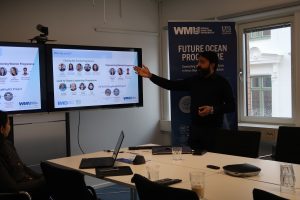
"collaboration between legal scholars and ocean experts"
The visit strengthened academic ties and reinforced the value of collaboration between legal scholars and ocean experts. By hosting students from Lund University, the WMU-Sasakawa Global Ocean Institute continues to promote the integrated knowledge and cross-disciplinary cooperation needed to support sustainable and equitable ocean futures.
For more information please contact the WMU-GOI at goisecretariat@wmu.se
About the World Maritime University
The World Maritime University (WMU) in Malmö, Sweden is established within the framework of the International Maritime Organization, a specialized agency of the United Nations. The mission of WMU is to be the world centre of excellence in postgraduate maritime and oceans education, professional training and research, while building global capacity and promoting sustainable development. WMU is an organization by and for the international maritime community and is committed to the United Nations 2030 Agenda for Sustainable Development.
About wmu-goi
The World Maritime University (WMU)-Sasakawa Global Ocean Institute (GOI) is an independent focal point for the ocean science-policy-law-industry-society interface where policymakers, the scientific community, regulators, industry actors, academics, and representatives of civil society meet to discuss how best to manage and use ocean spaces and their resources in accordance with the United Nations 2030 Agenda for Sustainable Development. The Institute was inaugurated in May 2018 and made possible through generous support from The Nippon Foundation of Japan, the Governments of Sweden, Canada, and Germany, as well as the City of Malmö.
About the Maritime and Transport Law programme at Lund University
The Maritime and Transport Law Programme at Lund University focuses on the legal frameworks governing shipping, international transport, trade, and maritime commerce, addressing issues such as contracts, liability, marine insurance, and regulatory compliance. It responds to technological innovation and the growing importance of sustainable and efficient maritime transport in global trade.