
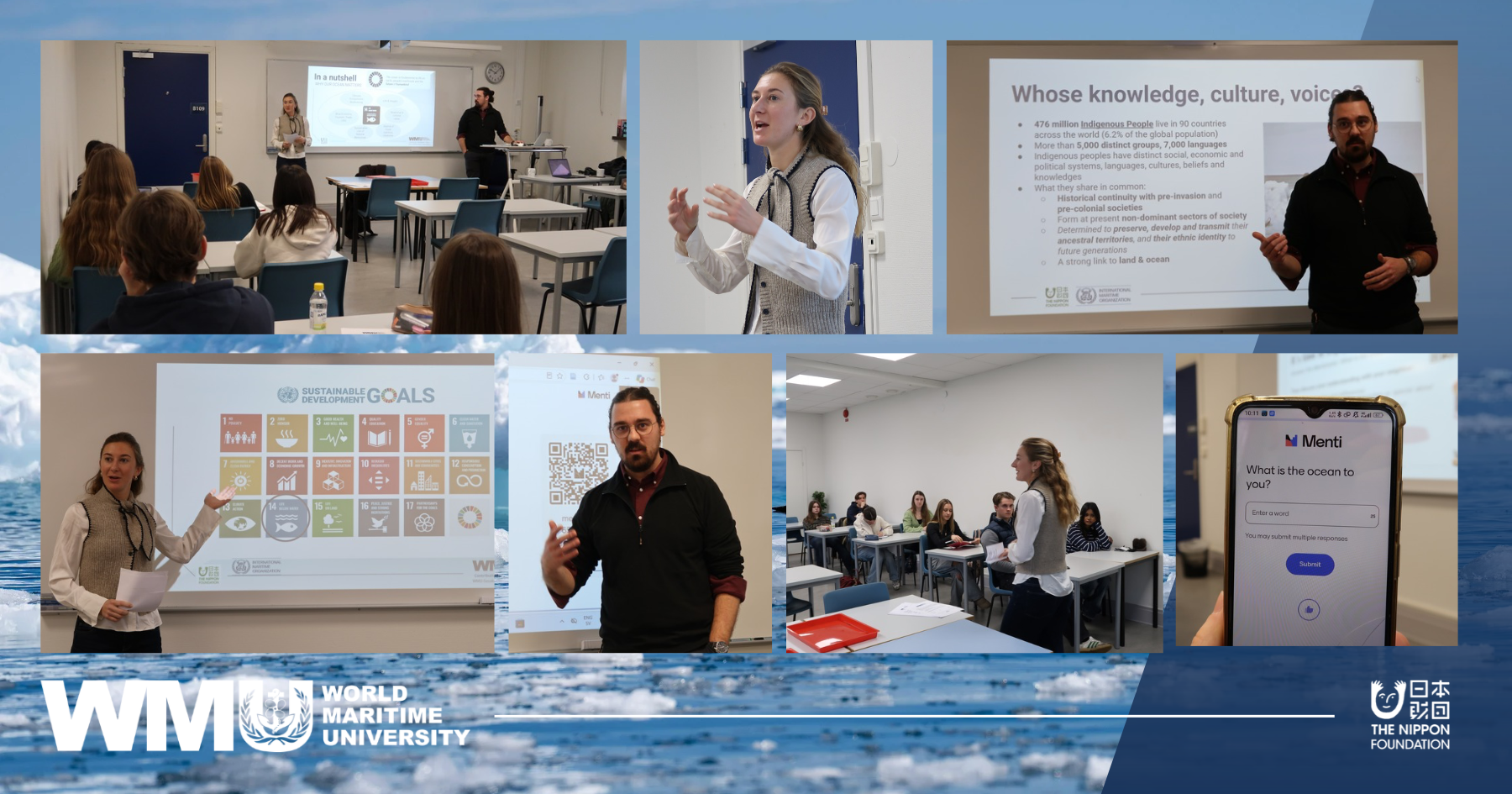
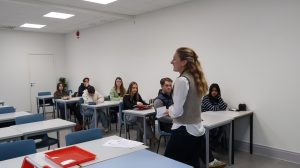
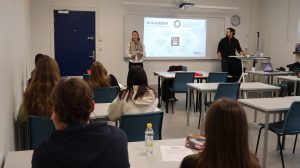
World Maritime University-Sasakawa Global Ocean Institute (WMU-GOI) Research Fellows Augustina Schick and Justus Hamm delivered a lecture entitled “Future Ocean Programme – Indigenous People in Ocean Governance” on 23 November 2026 at Malmö Borgarskola. The lecture engaged students from the International Baccalaureate Diploma Programme (IB-DP) as part of their Global Politics course, exploring the role of Indigenous Peoples in shaping ocean governance and the importance of recognizing their rights, knowledge and perspectives in international decision-making.
Future Ocean Programme lecture
indigenous peoples IN OCEAN GOVERNANCE
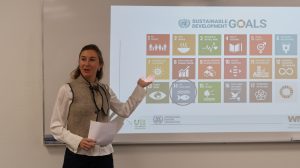
The lecture opened with an overview of the Sustainable Development Goals (SDGs) as an interconnected system, with particular attention to SDG 14: Life Below Water highlighting the role of the ocean in sustaining life, supporting livelihoods and shaping our global society.
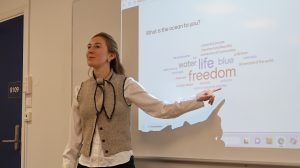
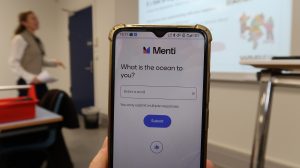
Through an interactive discussion, students reflected on what the ocean means to them, considering its ecological, economic, social and cultural significance. The conversation highlighted that, beyond being a shared global space and a source of biodiversity, the ocean connects people worldwide through food systems, climate, trade and transport.
A central theme was the relationship between Indigenous Peoples, the land and marine environments. Drawing on the experiences of the Sámi and Inuit peoples, discussions explored how Arctic marine areas are integral to Indigenous livelihoods, mobility, cultural identity and traditions. The concept of relational sustainability illustrated how these relationships are grounded in respect, reciprocity and interconnectedness between people and nature.
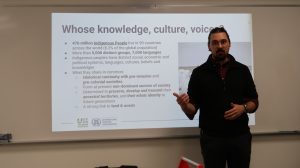
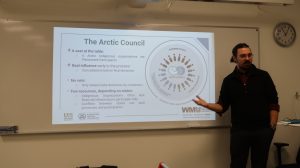
The discussion also highlighted the value of Indigenous Knowledge in ocean governance. Developed through generations of observation, experience and cultural transmission, these knowledge systems offer holistic perspectives that can complement scientific approaches to understanding and managing marine environments. Despite their valuable contributions, Indigenous Peoples continue to face barriers to meaningful participation in international decision-making, where States retain primary authority over governance processes.
Examples of existing frameworks, including the Arctic Council and the United Nations Declaration on the Rights of Indigenous Peoples (UNDRIP), illustrated both progress and remaining challenges in recognizing Indigenous rights and strengthening their participation. Particular attention was given to the UNDRIP including the principle of free, prior and informed consent (FPIC), which calls for States to consult and cooperate in good faith with Indigenous Peoples on decisions affecting them.
The lecture highlighted the importance of ensuring that Indigenous Peoples are not only recognized in international ocean governance frameworks but are also able to meaningfully contribute to decisions affecting their territories, knowledge systems and future generations. Students were encouraged to reflect on different political systems, worldviews and cultural traditions, and the importance of inclusive approaches to addressing global ocean challenges.
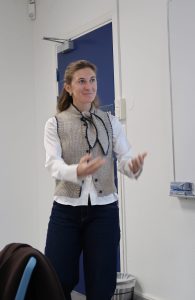
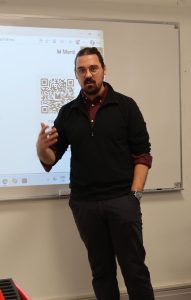
Youth engagement facilitator Joshua Viklund Masih also contributed to the session and the engagement formed part of the WMU-GOI Future Ocean Programme, under Pillar 2: Non-State Actors and Rights-Based Approaches, which examines the role of non-State actors and rights-based perspectives in advancing inclusive ocean governance.
About the world maritime university
The World Maritime University (WMU) in Malmö, Sweden is established within the framework of the International Maritime Organization, a specialized agency of the United Nations. The mission of WMU is to be the world centre of excellence in postgraduate maritime and oceans education, professional training and research, while building global capacity and promoting sustainable development. WMU is an organization by and for the international maritime community and is committed to the United Nations Sustainable Development Goals Agenda.
About the wmu-sasakawa global ocean institute
The World Maritime University’s WMU-Sasakawa Global Ocean Institute (WMU-GOI) is an independent focal point for the ocean science-policy-law-industry-society interface where policymakers, the scientific community, regulators, industry actors, academics, and representatives of civil society meet to discuss how best to manage and use ocean spaces and their resources in accordance with the United Nations 2030 Agenda for Sustainable Development. The Institute was inaugurated in May 2018 and made possible through generous support from The Nippon Foundation of Japan, the Governments of Sweden, Canada, and Germany, as well as the City of Malmö
About the FUTURE OCEAN PROGRAMME
The Future Ocean Programme is funded by The Nippon Foundation and aims to generate knowledge and understanding of how law, political science, and public policy are used to effect change in humanity’s relationship with the ocean to combat the triple planetary crisis of biodiversity loss, climate change and pollution