
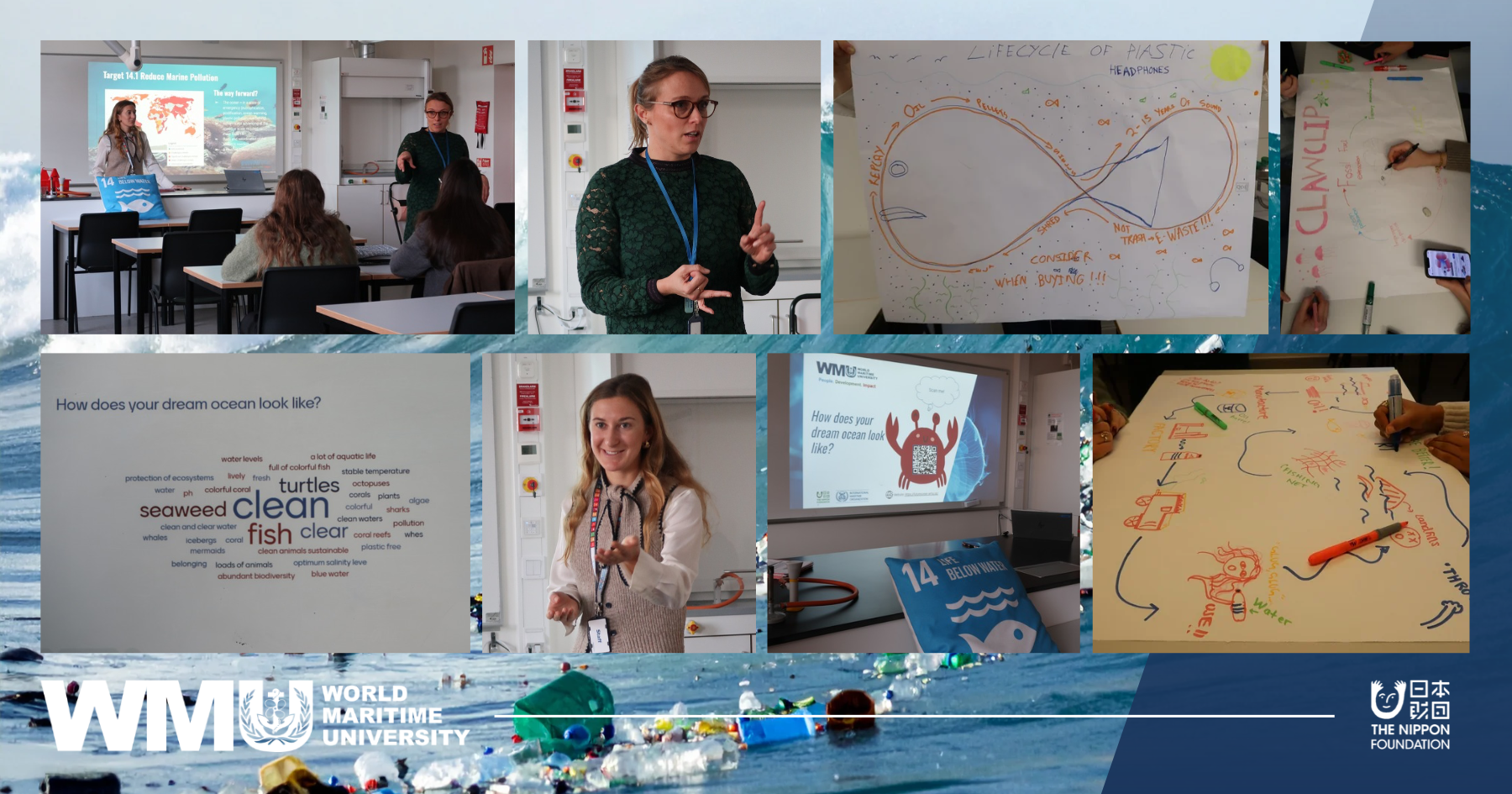
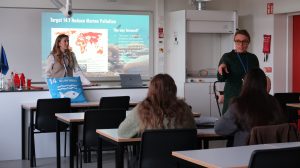
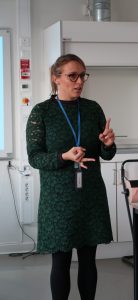
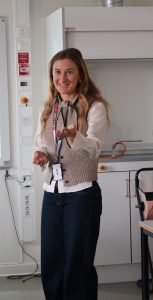
World Maritime University-Sasakawa Global Ocean Institute (WMU-GOI) Associate Professor Aleke Stöfen-O’Brien and Fellow Augustina Schick delivered a lecture entitled “Future Ocean Programme – Marine (Plastic) Pollution” on 23 November 2026 at Malmö Borgarskola. The lecture engaged students from the International Baccalaureate Diploma Programme (IB-DP) as part of their Natural Science Programme and Biology course, to explore the impacts of plastic pollution on marine ecosystems and the importance of global action to address this growing challenge.
Future Ocean Programme lecture
marine (plastic) pollution
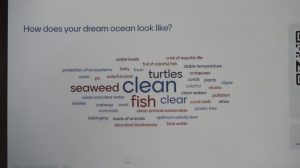
The session opened with reflections on recent international environmental discussions, including the UN Climate Change COP31, and the need to strengthen awareness and action to protect the marine environment. Through an interactive discussion, students were invited to describe their vision of a healthy ocean. A clean, clear ocean, rich in biodiversity and marine life, emerged as a shared aspiration, prompting reflection on the growing pressures threatening this vision, including pollution, biodiversity loss and climate change.
Introduction to the Sustainable Development Goals (SDGs) was further made, with particular attention to SDG 14 (Life Below Water) and its target to prevent and significantly reduce marine pollution. Discussions highlighted the gap between global commitments and implementation, emphasizing the need for stronger monitoring, accountability and coordinated international action. The ongoing negotiations towards a legally binding international instrument on plastic pollution were presented as an important opportunity to address the issue through global cooperation.
A central focus was the scale and complexity of marine plastic pollution, including its land-based, vessel-based and atmospheric sources. Lecturers explored the different forms of plastic pollution, from microplastics and nanoplastics to larger items, and their impacts on marine wildlife through ingestion, entanglement and the accumulation of plastic throughout food webs. The discussion also addressed how ocean currents transport and concentrate plastic debris, allowing pollution to spread far beyond its original source. The persistence of plastic in the environment was illustrated through striking examples, including a whale found dead with approximately 40 kilograms (88 pounds) of plastic waste in its stomach, and estimates that some plastic toothbrushes can take up to 500 years to decompose.
The session also examined the international negotiations towards a global plastics treaty, highlighting some of the key challenges, including addressing plastic production, the role of fossil fuels and questions of financing and implementation. These discussions encouraged students to consider the complexity of global environmental governance and the different responsibilities of States and other stakeholders in tackling plastic pollution.
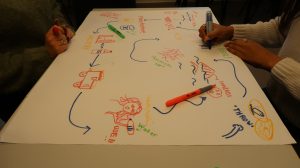
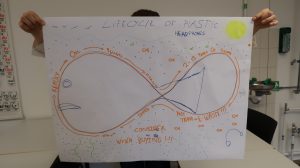
In a creative group activity, the students designed posters illustrating the life cycle of a selected plastic products. Through drawings and messages, they mapped the journey of a plastic product from production and consumption to disposal and potential impacts on marine ecosystems and human health, while identifying possible solutions and opportunities for change. The activity encouraged students to think critically about the systems, actors and governance structures behind plastic pollution, and how individual and collective action can contribute to solutions.
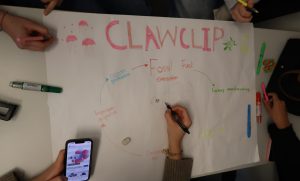
The engagement formed part of the WMU-GOI Future Ocean Programme, under Pillar 2: Non-State Actors and Rights-Based Approaches, which examines the role of non-State actors and rights-based perspectives in advancing inclusive ocean governance.
About the world maritime university
The World Maritime University (WMU) in Malmö, Sweden is established within the framework of the International Maritime Organization, a specialized agency of the United Nations. The mission of WMU is to be the world centre of excellence in postgraduate maritime and oceans education, professional training and research, while building global capacity and promoting sustainable development. WMU is an organization by and for the international maritime community and is committed to the United Nations Sustainable Development Goals Agenda.
About the wmu-sasakawa global ocean institute
The World Maritime University’s WMU-Sasakawa Global Ocean Institute (WMU-GOI) is an independent focal point for the ocean science-policy-law-industry-society interface where policymakers, the scientific community, regulators, industry actors, academics, and representatives of civil society meet to discuss how best to manage and use ocean spaces and their resources in accordance with the United Nations 2030 Agenda for Sustainable Development. The Institute was inaugurated in May 2018 and made possible through generous support from The Nippon Foundation of Japan, the Governments of Sweden, Canada, and Germany, as well as the City of Malmö
About the FUTURE OCEAN PROGRAMME
The Future Ocean Programme is funded by The Nippon Foundation and aims to generate knowledge and understanding of how law, political science, and public policy are used to effect change in humanity’s relationship with the ocean to combat the triple planetary crisis of biodiversity loss, climate change and pollution