
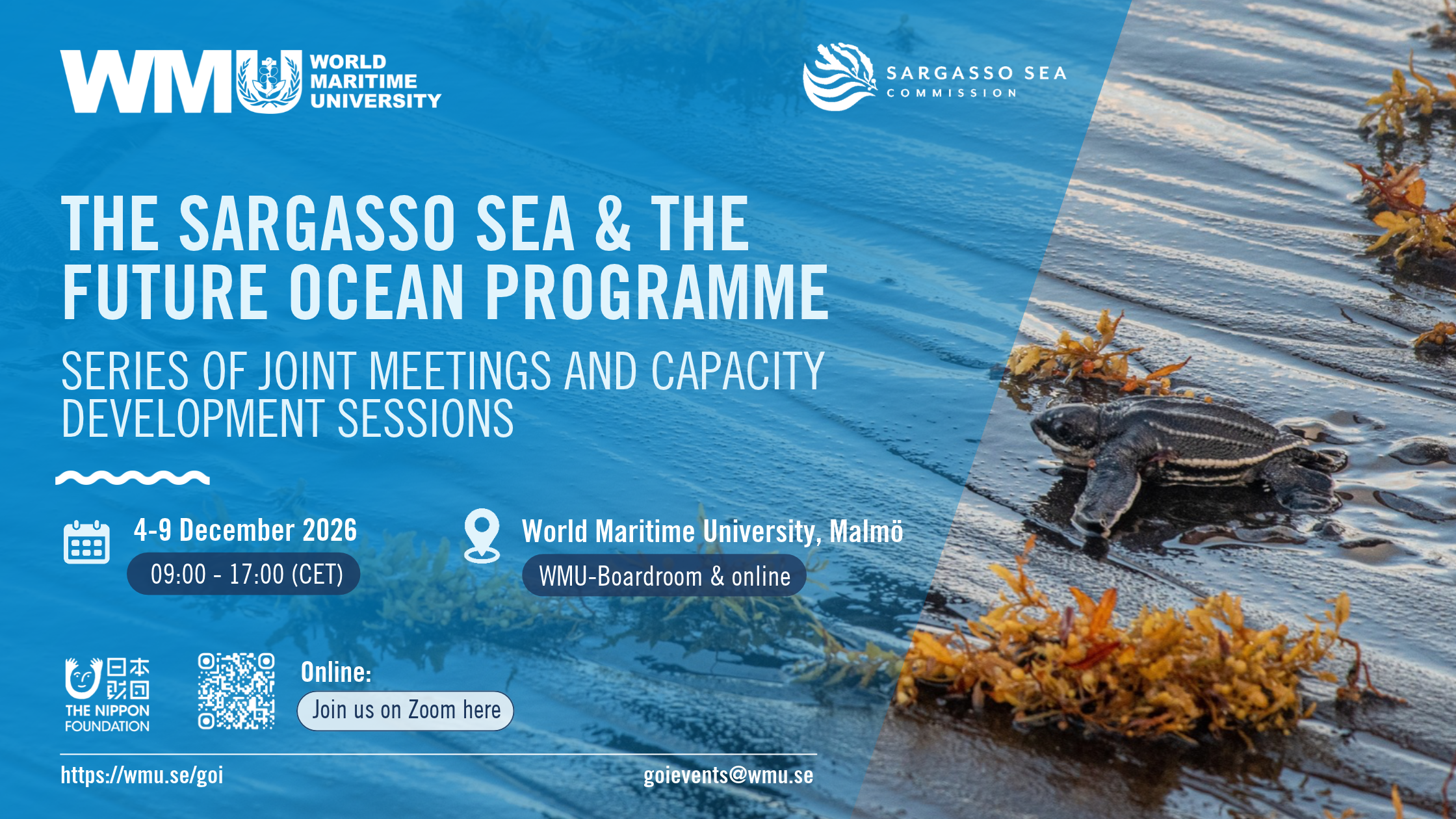
The World Maritime University (WMU)-Sasakawa Global Ocean Institute (GOI) and the Sargasso Sea Commission (SSC) will jointly convene a series of meetings and capacity development sessions from 4-9 December 2026 at WMU headquarters in Malmö, Sweden. The series forms part of the Global Environment Facility (GEF)-United Nations Development Programme (UNDP) - UNESCO - Intergovernmental Oceanographic Commission (IOC) project, in which WMU serves as an in-kind supporting partner.
sargasso sea series of meetings
& wmu-goi future ocean programme
The meetings will bring together members of the Sargasso Sea project team, SSC Commissioners, project partners, subject-matter experts and representatives of WMU-GOI’s Future Ocean Programme. Discussions will focus on the project´s business, reporting, and planning, a review of the status of the Strategic Action Programme, an update on the development of the data management strategy and associated partnership.
The series will begin with a Future Ocean Programme consultative workshop, providing an opportunity to review research and progress across its four pillars: Regimes and Institutional Interactions; Non-state Actors; Ocean Observation Technologies; and the Futures of Ocean Governance. The workshop will also consider priorities for the Programme’s final year and the contribution of its research to addressing emerging challenges in ocean governance.
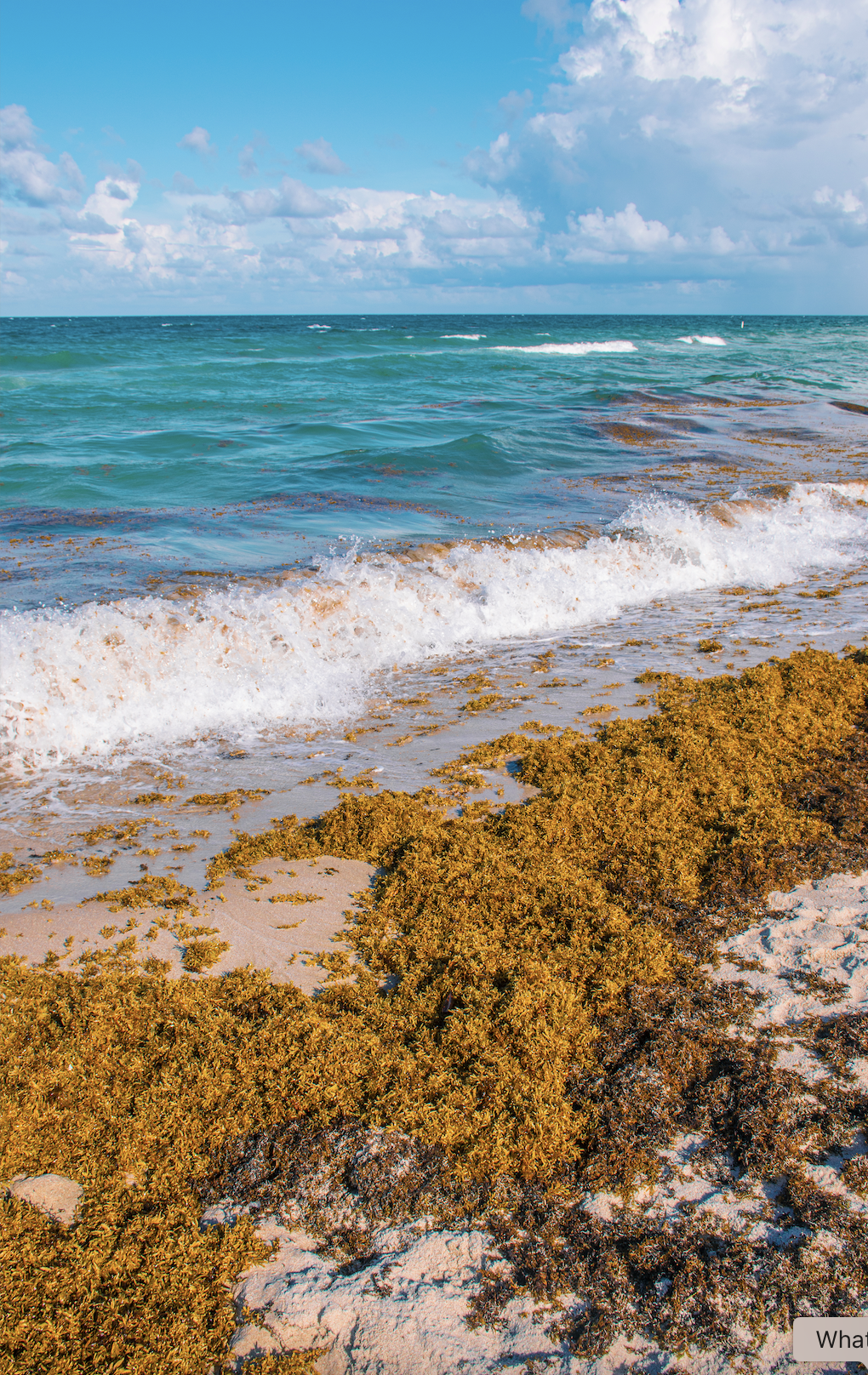
The meetings build on ongoing collaboration between the SSC, the GEF-led project partners and WMU-GOI, including previous joint meetings in September 2024 and October 2025. The continued partnership reflects a shared commitment to strengthening science-based ocean governance, international cooperation and the long-term protection of the Sargasso Sea, an ecologically significant area of biodiversity in the high seas.
learN more
About the Sargasso Sea Commission
The Sargasso Sea Commission (SSC) was founded after the signing of the Hamilton Declaration on Collaboration for the Conservation of the Sargasso Sea in Bermuda in 2014 and to date has of ten government signatories. Currently, the area of collaboration for the SSC consists of 4 million square kilometers and is governed by the high seas governance system under the law of the sea and international law. A large focus of the SSC is to collect data using modern technological inventions and AI, by which it aims to monitor and track human activity in the area and how it affects the unique marine environment of the area as well as its marine life.
About the Stewardship Project
In June 2020, the Global Environment Facility (GEF) Council approved its latest Areas Beyond National Jurisdiction (ABNJ) programme entitled "Common Oceans - Sustainable utilisation and conservation of biodiversity in areas beyond national jurisdiction"; the programme is financed under the GEF's International Waters focal area. One component of the GEF ABNJ programme is the project, "Strengthening the stewardship of an economically and biologically significant high seas area – the Sargasso Sea". The overall objective of the 4-year, nearly $3 million project is to facilitate a collaborative, cross-sectoral, and sustainable stewardship approach for the Sargasso Sea through improvement of the knowledge base and strengthened frameworks for collaborative management and governance.
About the world maritime university
The World Maritime University (WMU) in Malmö, Sweden is established within the framework of the International Maritime Organization, a specialized agency of the United Nations. The mission of WMU is to be the world centre of excellence in postgraduate maritime and oceans education, professional training and research, while building global capacity and promoting sustainable development. WMU is an organization by and for the international maritime community and is committed to the United Nations Sustainable Development Goals Agenda.
About the wmu-sasakawa global ocean institute
The World Maritime University’s WMU-Sasakawa Global Ocean Institute (WMU-GOI) is an independent focal point for the ocean science-policy-law-industry-society interface where policymakers, the scientific community, regulators, industry actors, academics, and representatives of civil society meet to discuss how best to manage and use ocean spaces and their resources in accordance with the United Nations 2030 Agenda for Sustainable Development. The Institute was inaugurated in May 2018 and made possible through generous support from The Nippon Foundation of Japan, the Governments of Sweden, Canada, and Germany, as well as the City of Malmö
About the FUTURE OCEAN PROGRAMME
The Future Ocean Programme is funded by The Nippon Foundation and aims to generate knowledge and understanding of how law, political science, and public policy are used to effect change in humanity’s relationship with the ocean to combat the triple planetary crisis of biodiversity loss, climate change and pollution