
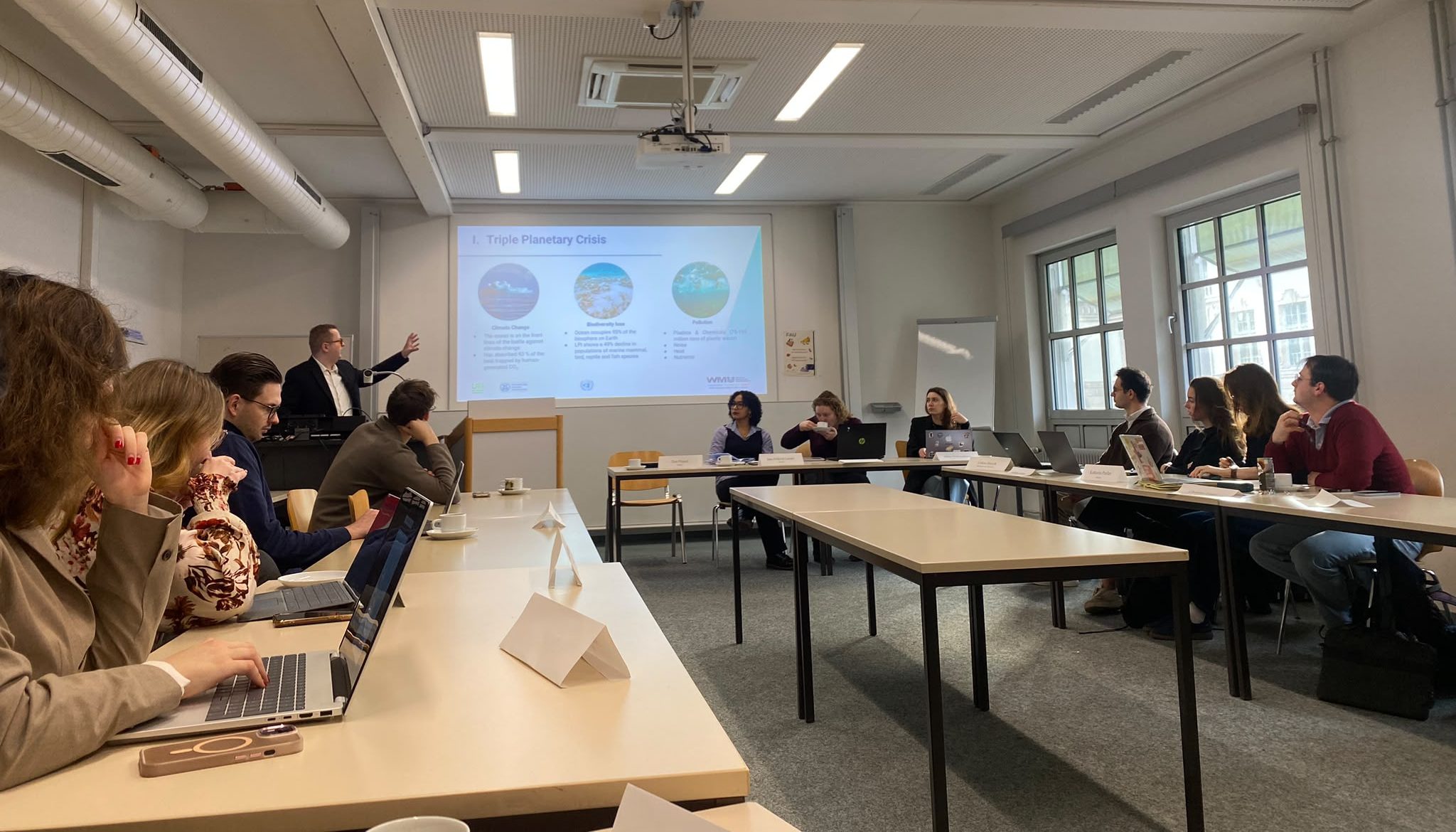
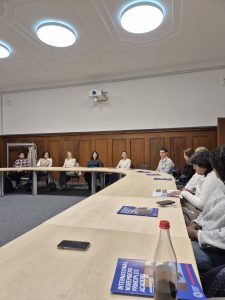
¨Tim Pöppel, Project and Research Associate (GOI Fellow) at the World Maritime University (WMU)-Sasakawa Global Ocean Institute (GOI), participated in the 15th UN Research Colloquium, titled “The United Nations in Crisis: Threats, Transformations and Futures of International Law”, held from 12 to 14 November 2026 in Nuremberg, Germany. The colloquium was co-organized by the Working Group of Young UN Researchers of the United Nations Association of Germany (DGVN e.V.) and the Cluster of Excellence “Transforming Human Rights” at Friedrich-Alexander University Erlangen-Nürnberg (FAU).
15th UN Research Colloquium
The United Nations in Crisis: Threats, Transformations and Futures of International Law
about the workshop
Bringing together students and early-career researchers working on the United Nations, international law and global governance, the colloquium explored the pressures facing the UN-centred international order amid geopolitical contestation and democratic backsliding. Discussions considered how institutional authority, international norms and global governance frameworks are being challenged and adapted, as well as the implications for the future of international law.
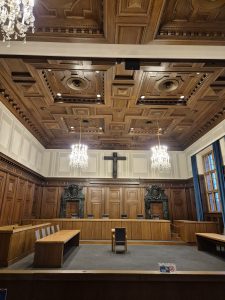
The colloquium opened with remarks by Professor Dr Grażyna Baranowska on the relevance of the United Nations in turbulent times. The programme also included a guided tour to the Nuremberg Trials Memorial, including the Courtroom 600, and featured three panels and a keynote lecture by Professor Dr Elvira Domínguez-Redondo.
WMU-GOI Contributions
Tim Pöppel contributed to Panel 1 “International Law in Crisis: Contestation, Adaptation and Resilience”, alongside Ms Ines Frikech Laraki, Ms Alina Aleksandrova and Ms Emma Sundt. He presented research on “Treaty-Making Paralysis and the Turn to Custom: A Neglected Dimension of the Crisis of International Law”, examining the general problems faced by public international law.
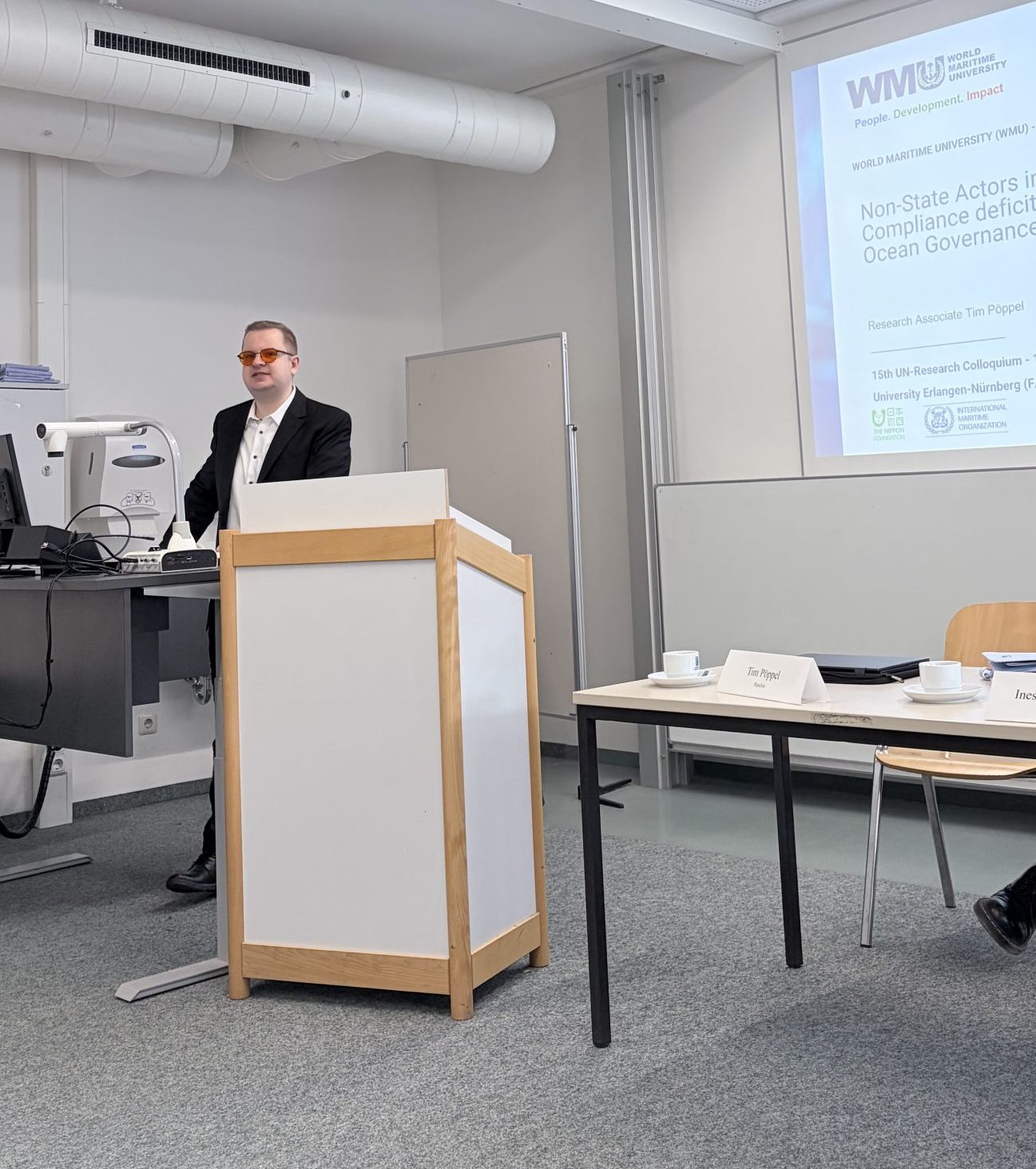
Drawing on his research in ocean governance, he also presented on “Non-State Actors in International Law – Compliance Deficits of Unwritten Law in Ocean Governance”. His contribution explored how the reliance on custom in international law can be an obstacle to effective compliance by non-State actors.
His participation reflects the research objectives of WMU-GOI’s Future Ocean Programme, particularly Pillar 2, “Non-State Actors and Rights-Based Approach”. It supported interdisciplinary dialogue and the exchange of research perspectives on the effectiveness and resilience of international legal frameworks.
About the world maritime university
The World Maritime University (WMU) in Malmö, Sweden is established within the framework of the International Maritime Organization, a specialized agency of the United Nations. The mission of WMU is to be the world centre of excellence in postgraduate maritime and oceans education, professional training and research, while building global capacity and promoting sustainable development. WMU is an organization by and for the international maritime community and is committed to the United Nations Sustainable Development Goals Agenda.
About the wmu-sasakawa global ocean institute
The World Maritime University’s WMU-Sasakawa Global Ocean Institute (WMU-GOI) is an independent focal point for the ocean science-policy-law-industry-society interface where policymakers, the scientific community, regulators, industry actors, academics, and representatives of civil society meet to discuss how best to manage and use ocean spaces and their resources in accordance with the United Nations 2030 Agenda for Sustainable Development. The Institute was inaugurated in May 2018 and made possible through generous support from The Nippon Foundation of Japan, the Governments of Sweden, Canada, and Germany, as well as the City of Malmö
About the FUTURE OCEAN PROGRAMME
The Future Ocean Programme is funded by The Nippon Foundation and aims to generate knowledge and understanding of how law, political science, and public policy are used to effect change in humanity’s relationship with the ocean to combat the triple planetary crisis of biodiversity loss, climate change and pollution