
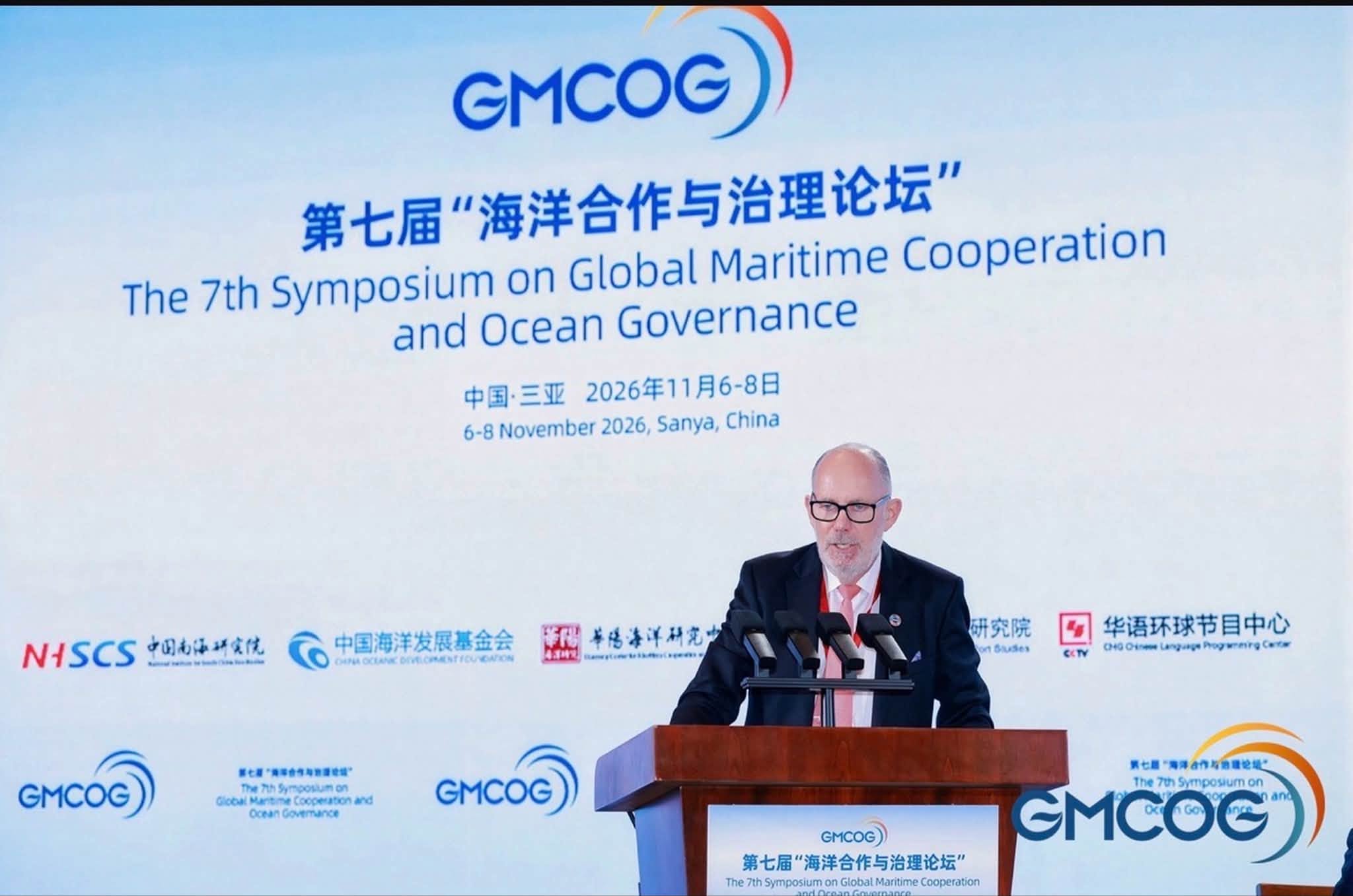
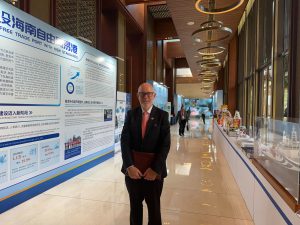
Professor Ronán Long, Director of the World Maritime University-Sasakawa Global Ocean Institute (WMU-GOI), participated in the 7th Symposium on Global Maritime Cooperation and Ocean Governance, held in Sanya, China, from 6 to 8 November 2026. The symposium brought together more than 400 experts, scholars, government officials, diplomatic representatives and international organizations from over 30 countries and regions to exchange perspectives on maritime cooperation, international law and global ocean governance.
7th Symposium
GLOBAL MARITIME COOPERATION AND OCEAN GOVERNANCE
Discussions addressed contemporary challenges in maritime security, international rules, marine ecological protection and blue economy development, with particular attention to strengthening international cooperation and advancing the implementation of the Agreement on Biodiversity Beyond National Jurisdiction (BBNJ Agreement). The symposium also provided a platform for dialogue on the role of multilateralism and international law, including the United Nations Convention on the Law of the Sea (UNCLOS), in supporting effective and inclusive ocean governance.
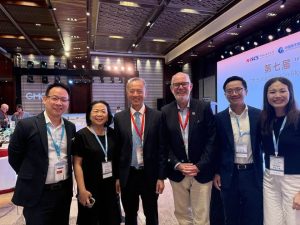
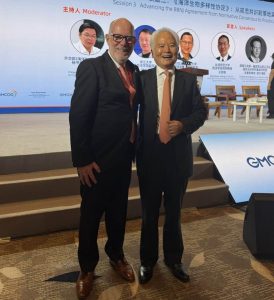
Professor Long contributed to discussions on the BBNJ Agreement, including a dedicated side event held on 8 November under the theme “Vision and Action - Conserving Marine Biodiversity under the BBNJ Agreement”. Drawing on research undertaken through the WMU-GOI Future Ocean Programme, he highlighted the potential of China's strong data capabilities to support the implementation of the Agreement's provisions on sharing non-monetary benefits arising from marine genetic resources. His contribution also emphasized the importance of international cooperation and a rules-based approach to ocean governance, supported by UNCLOS and the work of the United Nations and its specialized agencies.
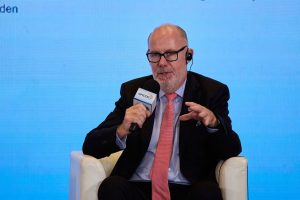
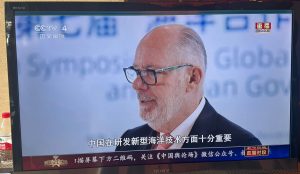
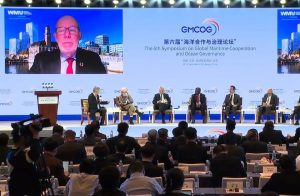
The symposium provided an opportunity to exchange perspectives on priorities for the effective implementation of the BBNJ Agreement and to strengthen dialogue with Chinese academic and institutional partners, including representatives of the Chinese Academy of Sciences, Shanghai Jiao Tong University and Zhejiang University. The event also saw the release of the Global Maritime Security Report 2025–2026, addressing emerging challenges in maritime security and ocean governance.
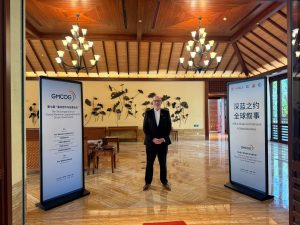
The event was co-organized by the CMG Chinese Language Programming Center, the National Institute for South China Sea Studies, the China Oceanic Development Foundation, the Huayang Center for Maritime Cooperation and Ocean Governance, the Hainan Institute for Free Trade Port Studies and the CMG Hainan Bureau.
About the world maritime university
The World Maritime University (WMU) in Malmö, Sweden is established within the framework of the International Maritime Organization, a specialized agency of the United Nations. The mission of WMU is to be the world centre of excellence in postgraduate maritime and oceans education, professional training and research, while building global capacity and promoting sustainable development. WMU is an organization by and for the international maritime community and is committed to the United Nations Sustainable Development Goals Agenda.
About the wmu-sasakawa global ocean institute
The World Maritime University’s WMU-Sasakawa Global Ocean Institute (WMU-GOI) is an independent focal point for the ocean science-policy-law-industry-society interface where policymakers, the scientific community, regulators, industry actors, academics, and representatives of civil society meet to discuss how best to manage and use ocean spaces and their resources in accordance with the United Nations 2030 Agenda for Sustainable Development. The Institute was inaugurated in May 2018 and made possible through generous support from The Nippon Foundation of Japan, the Governments of Sweden, Canada, and Germany, as well as the City of Malmö
About the FUTURE OCEAN PROGRAMME
The Future Ocean Programme is funded by The Nippon Foundation and aims to generate knowledge and understanding of how law, political science, and public policy are used to effect change in humanity’s relationship with the ocean to combat the triple planetary crisis of biodiversity loss, climate change and pollution