
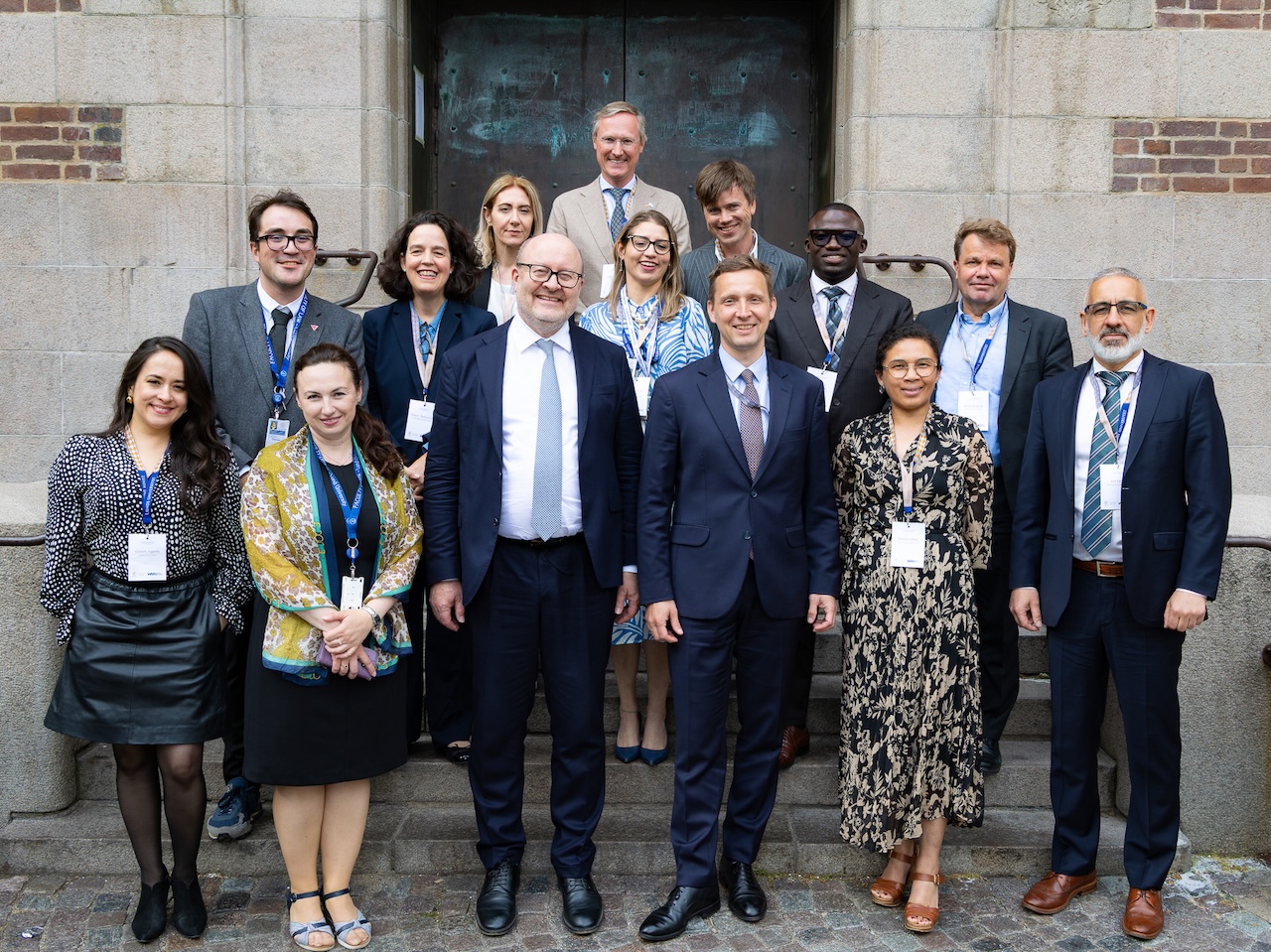
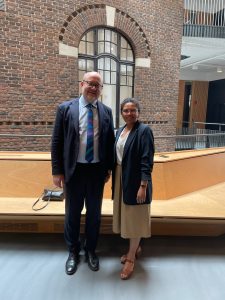
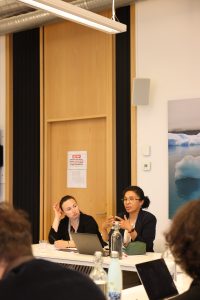
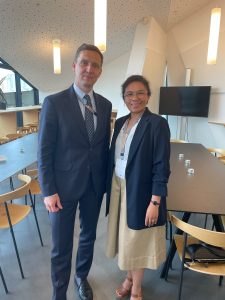
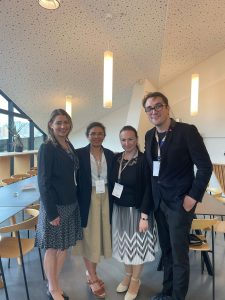
Dr. Vonintsoa Rafaly, Postdoctoral Fellow at the World Maritime University (WMU)-Sasakawa Global Ocean Institute (GOI) delivered a presentation at an invitation-only workshop entitled ‘Ius Maris Climaticum: Directions in Maritime Law and Policy After the Climate Advisory Opinions’ held on 8-9 June 2026 at the Faculty of Law, Lund University, in collaboration with the World Maritime University.
IUS MARIS CLIMATICUM
DIRECTIONS IN MARITIME LAW AND POLICY AFTER THE CLIMATE ADVISORY OPINIONS
about the workshop
The workshop convened a select group of scholars, judges, and practitioners to examine the implications of the 2024–2025 advisory opinions of ITLOS, the ICJ, the IACtHR, and the ECtHR, together with recent domestic decisions, including Sweden’s Aurora judgment, for various dimensions of law of the sea and maritime law. The workshop is intended to be the first step toward establishing a standing Expert Network.
about wmu-goi contributions
Her presentation, titled “The temporality of due diligence: A reading of the ITLOS advisory opinion”, was a follow-up of her recent participation in the CCS at Sea Conference (7-8 May, 2026). She emphasized the importance of the ITLOS advisory opinion in making visible the different temporalities through which due diligence operates. She particularly highlighted the temporal features of due diligence (anticipatory, continuity, and adaptivity) and their importance for the future of ocean governance, especially in addressing long-term risks to the marine environment associated with human activities, such as geological carbon storage. This presentation innovates in making visible the temporal hurdles through which governments, practitioners, courts and tribunals assess the conduct of states against their due diligence obligation to prevent, reduce and control pollution to the marine environment in the future.
For more information please contact the WMU-GOI at goisecretariat@wmu.se
About the World Maritime University
The World Maritime University (WMU) in Malmö, Sweden is established within the framework of the International Maritime Organization, a specialized agency of the United Nations. The mission of WMU is to be the world centre of excellence in postgraduate maritime and oceans education, professional training and research, while building global capacity and promoting sustainable development. WMU is an organization by and for the international maritime community and is committed to the United Nations 2030 Agenda for Sustainable Development.
About wmu-goi
The World Maritime University (WMU)-Sasakawa Global Ocean Institute (GOI) is an independent focal point for the ocean science-policy-law-industry-society interface where policymakers, the scientific community, regulators, industry actors, academics, and representatives of civil society meet to discuss how best to manage and use ocean spaces and their resources in accordance with the United Nations 2030 Agenda for Sustainable Development. The Institute was inaugurated in May 2018 and made possible through generous support from The Nippon Foundation of Japan, the Governments of Sweden, Canada, and Germany, as well as the City of Malmö.