
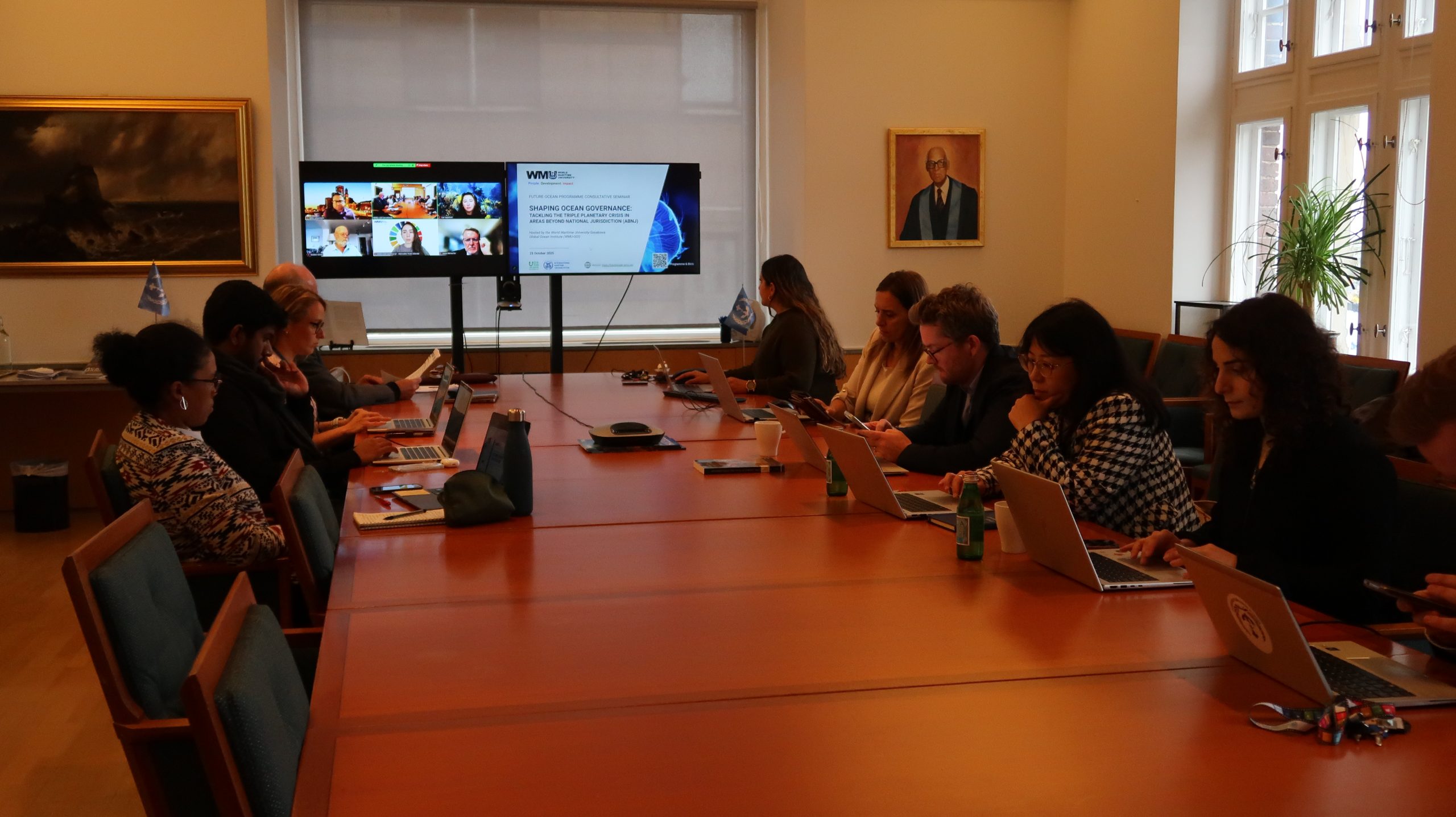
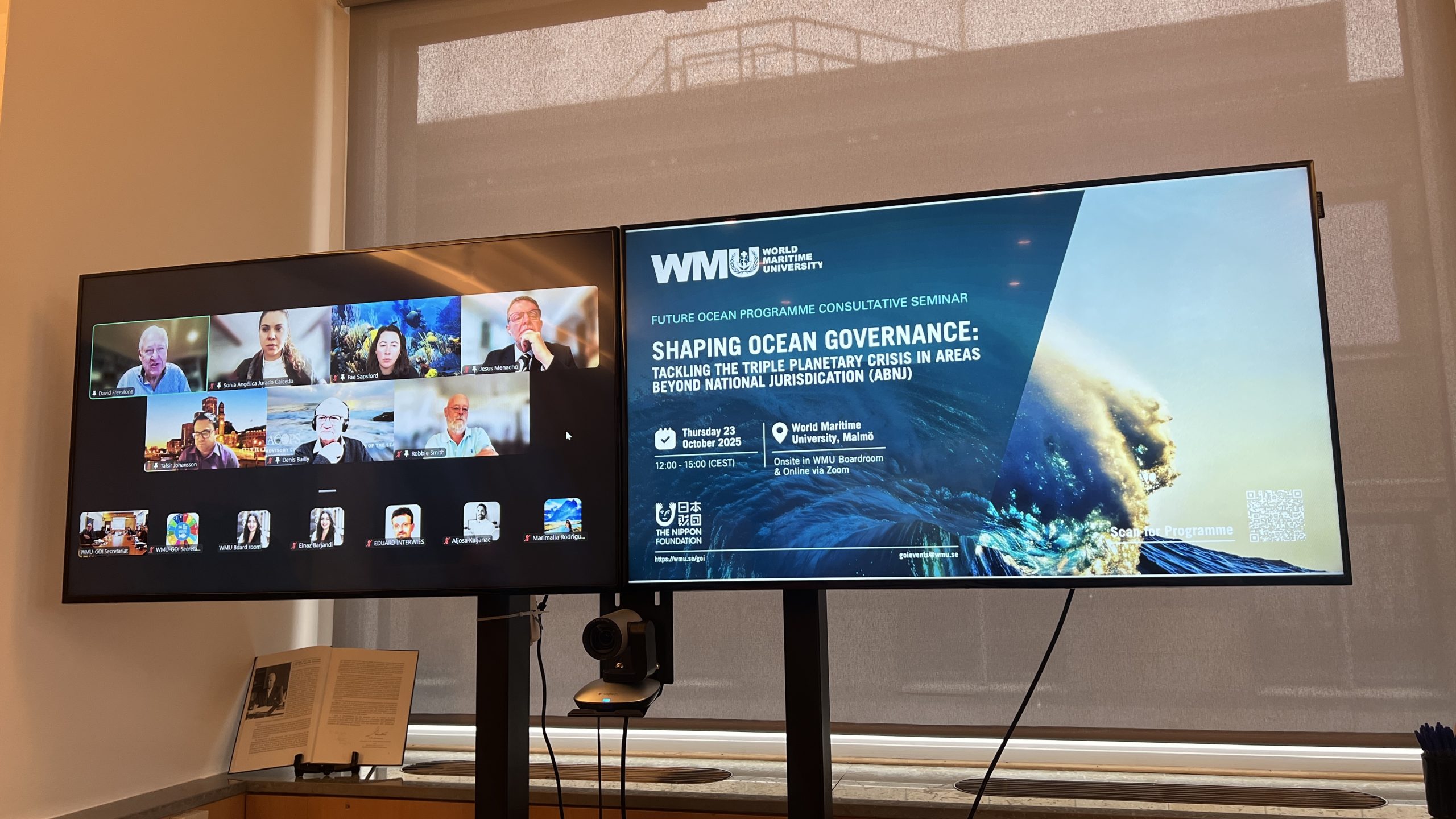
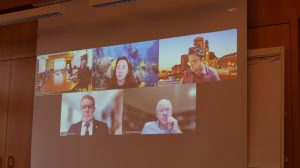
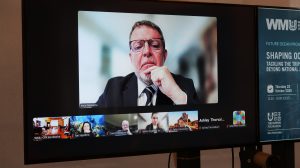
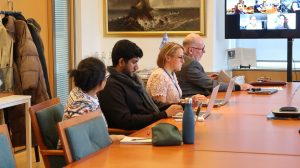
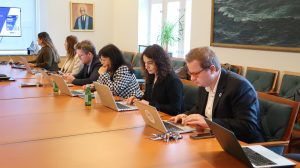
Following last year´s joint meetings and capacity development seminars, the World Maritime University–Sasakawa Global Ocean Institute (WMU-GOI) convened a Future Ocean Programme Consultative Seminar on 23 October 2025 at WMU in Malmö and online. The seminar was held as a part of the Sargasso Sea Commission (SSC) Stewardship Project Technical Meetings hosted by the WMU-GOI.
Future Ocean Programme Consultative Seminar
Shaping Ocean Governance: Tackling the Triple Planetary Crisis in Areas Beyond National Jurisdiction (ABNJ)
The seminar reviewed Year 1 progress across the Programme’s four research pillars and outlined priorities for Year 2, engaging participants in a consultative roundtable to guide future research and support transformative ocean action. Attendees included Future Ocean Programme Principal Investigators, external expert advisors, technical specialists, and researchers in ocean governance.
WMU-GOI Contributions
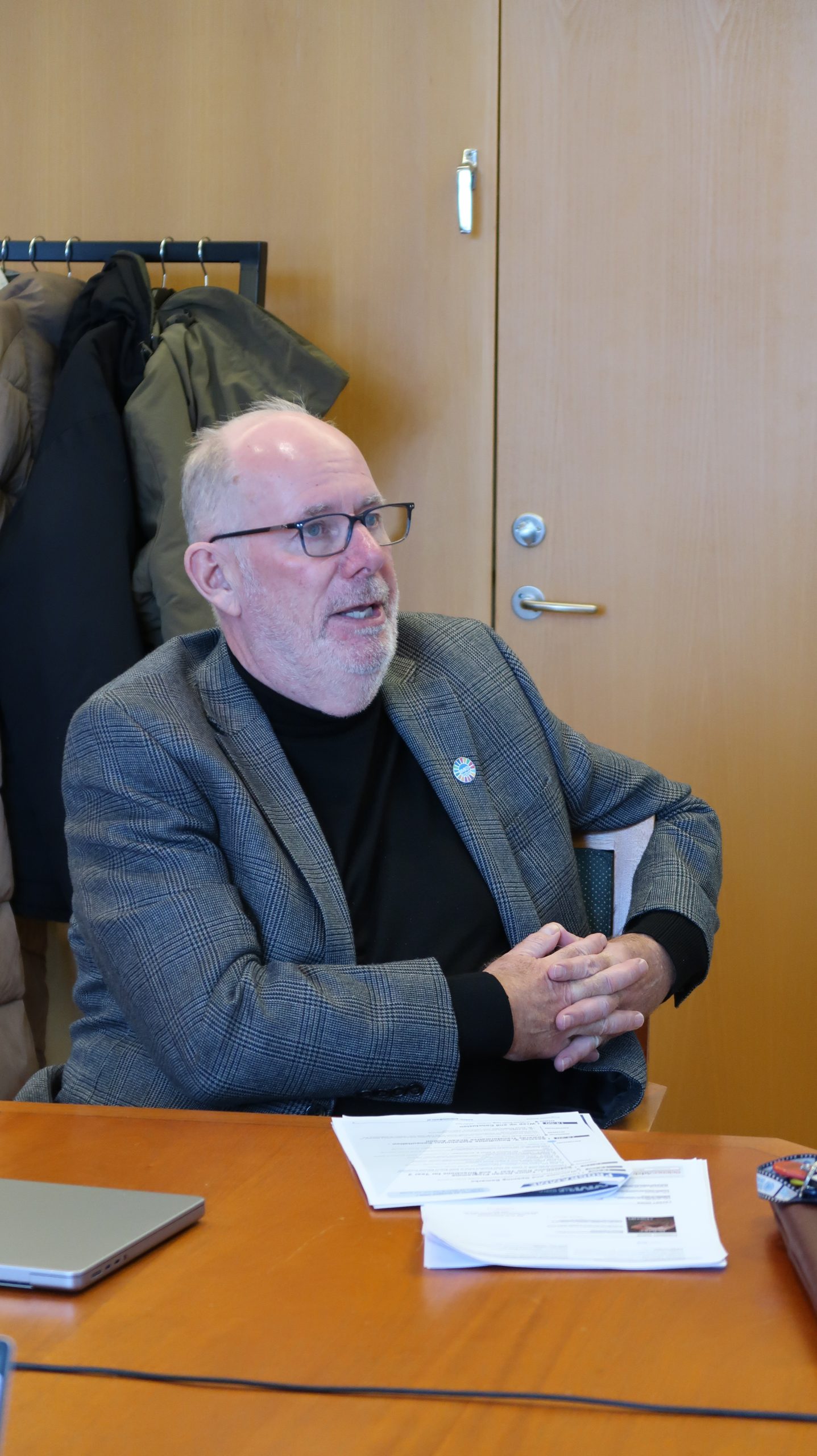
In his opening remarks, Professor Ronán Long, Director of the WMU-GOI highlighted the Programme’s objectives, global partnerships, and links to the BBNJ Clinic supporting legal capacity development for small island developing states.
EVENT'S SESSIONS
Session 1 featured updates from the four pillars, covering interactions among ocean governance regimes, the role of non-state actors, advances in ocean observation and data-driven decision-support tools, and scenario-based modelling to address systemic inequalities and inform BBNJ implementation. Presenters underscored the Programme’s interdisciplinary collaboration and its contributions to innovative legal and policy tools for ocean sustainability.
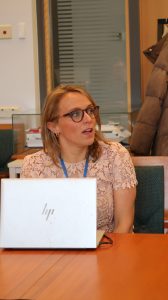
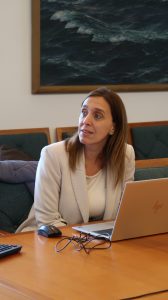
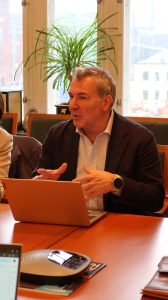
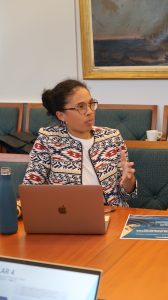
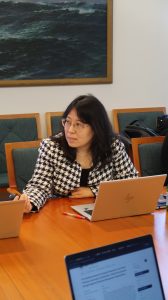
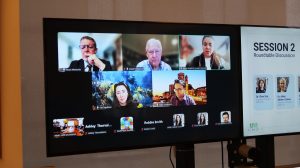
Session 2, “Towards Transformative Ocean Action,” engaged invited experts in discussion on high seas governance, addressing inter-pillar linkages, modelling approaches, marine technology, non-state actor integration, and governance challenges in states with limited policy space. As the Programme has entered its second year, the seminar played an important role in refining research priorities and strengthening partnerships for upcoming publications, events, and outreach.
About the world maritime university
The World Maritime University (WMU) in Malmö, Sweden is established within the framework of the International Maritime Organization, a specialized agency of the United Nations. The mission of WMU is to be the world centre of excellence in postgraduate maritime and oceans education, professional training and research, while building global capacity and promoting sustainable development. WMU is an organization by and for the international maritime community and is committed to the United Nations Sustainable Development Goals Agenda.
About the wmu-sasakawa global ocean institute
The World Maritime University’s WMU-Sasakawa Global Ocean Institute (WMU-GOI) is an independent focal point for the ocean science-policy-law-industry-society interface where policymakers, the scientific community, regulators, industry actors, academics, and representatives of civil society meet to discuss how best to manage and use ocean spaces and their resources in accordance with the United Nations 2030 Agenda for Sustainable Development. The Institute was inaugurated in May 2018 and made possible through generous support from The Nippon Foundation of Japan, the Governments of Sweden, Canada, and Germany, as well as the City of Malmö
About the FUTURE OCEAN PROGRAMME
The Future Ocean Programme is funded by The Nippon Foundation and aims to generate knowledge and understanding of how law, political science, and public policy are used to effect change in humanity’s relationship with the ocean to combat the triple planetary crisis of biodiversity loss, climate change and pollution