
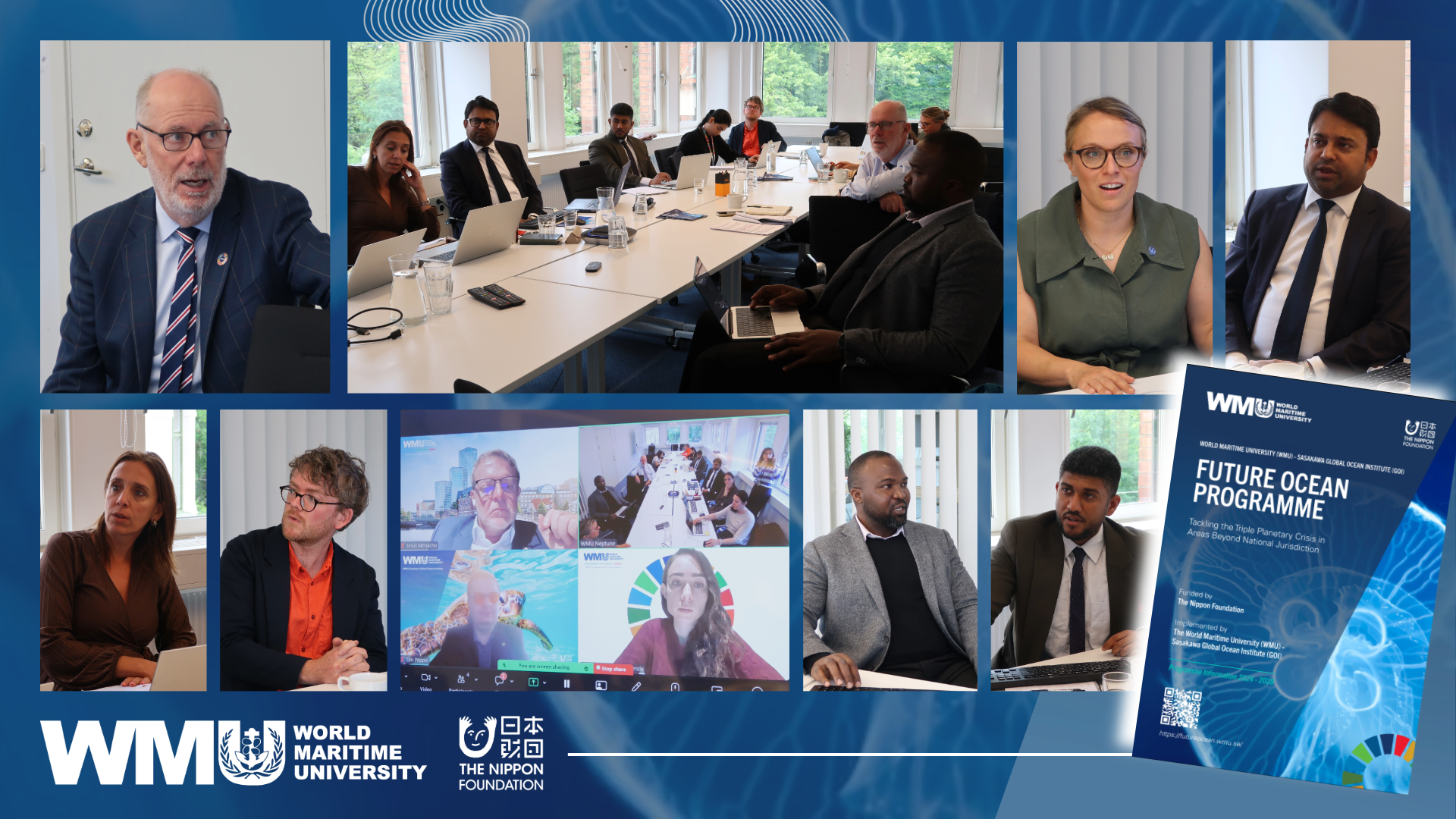
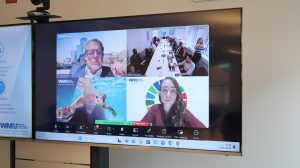
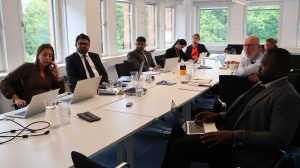
The WMU-Sasakawa Global Ocean Institute (WMU-GOI) convened a Future Ocean Programme Internal Workshop, on 9 June 2026 at the World Maritime University in Malmö, Sweden.
The workshop was held as part of the Future Ocean Programme, a four-year interdisciplinary research initiative examining the future of ocean governance over a fifty-year span (2024–2074). The Programme explores how governance systems can tackle the triple planetary crisis of biodiversity loss, climate change, and marine pollution.
Future Ocean Programme internal workshop
Progress updates and strategic priorities ahead
Bringing together WMU-GOI Director, Principal Investigators, external expert advisors, PhD candidates, and the WMU-GOI operations team, the workshop aimed at stock-taking of the efforts and progress made during the Programme’s second year and identified priorities for the years ahead. Discussions focused on research outputs, partnerships, events, policy impact, and planning for the 2026–2028 period.
WMU-GOI Contributions
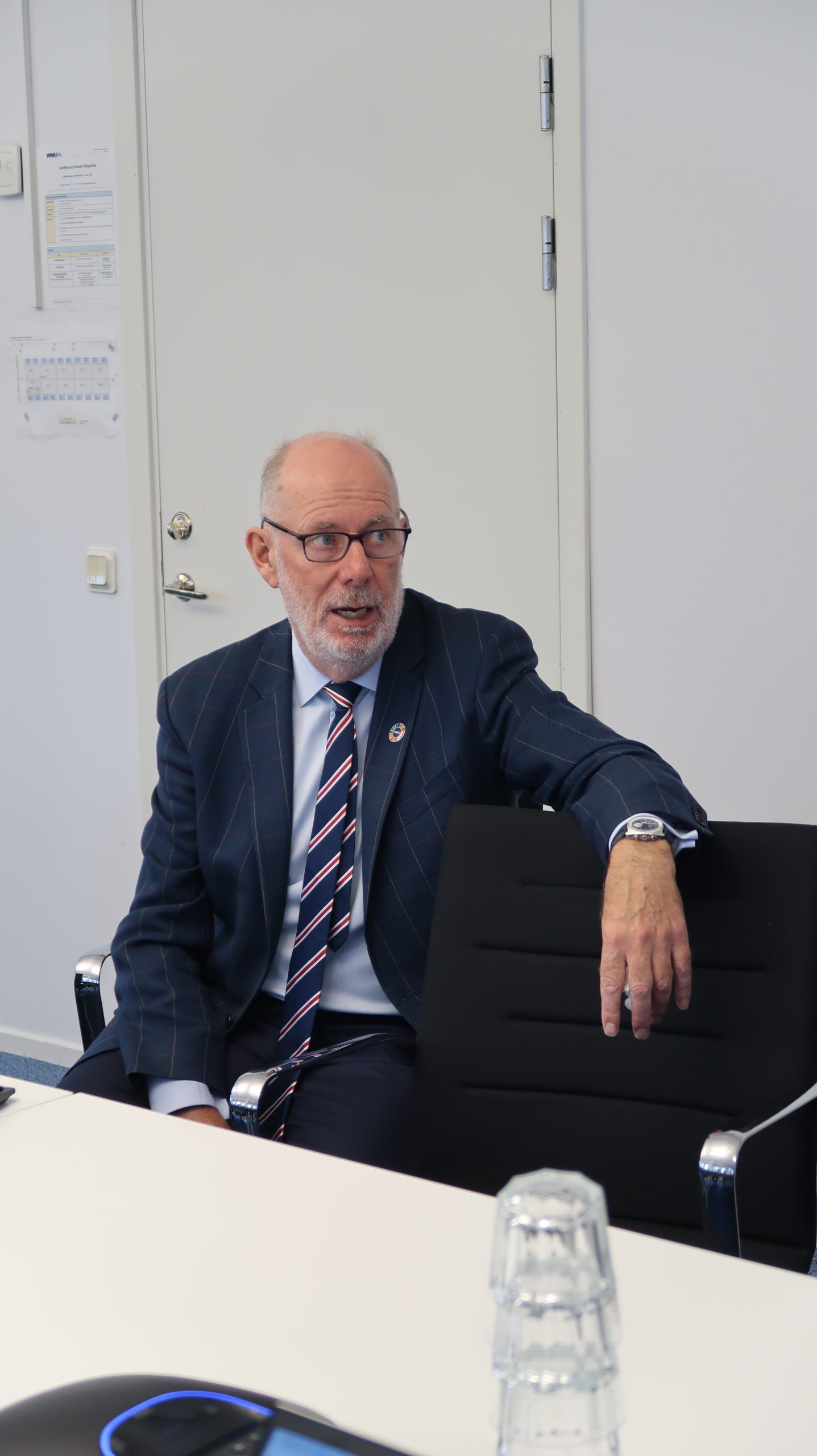
In his opening remarks, Professor Ronán Long, Director of WMU-GOI, reflected on the Programme’s objectives, global partnerships and highlighted recent developments across its research agenda. He also shared insights from his participation at the Island State Ocean Summit in Tokyo and provided updates on the five case studies under Pillar 1 of the Programme, which examines interactions among ocean governance regimes and institutions and their implications for the future of global ocean governance.
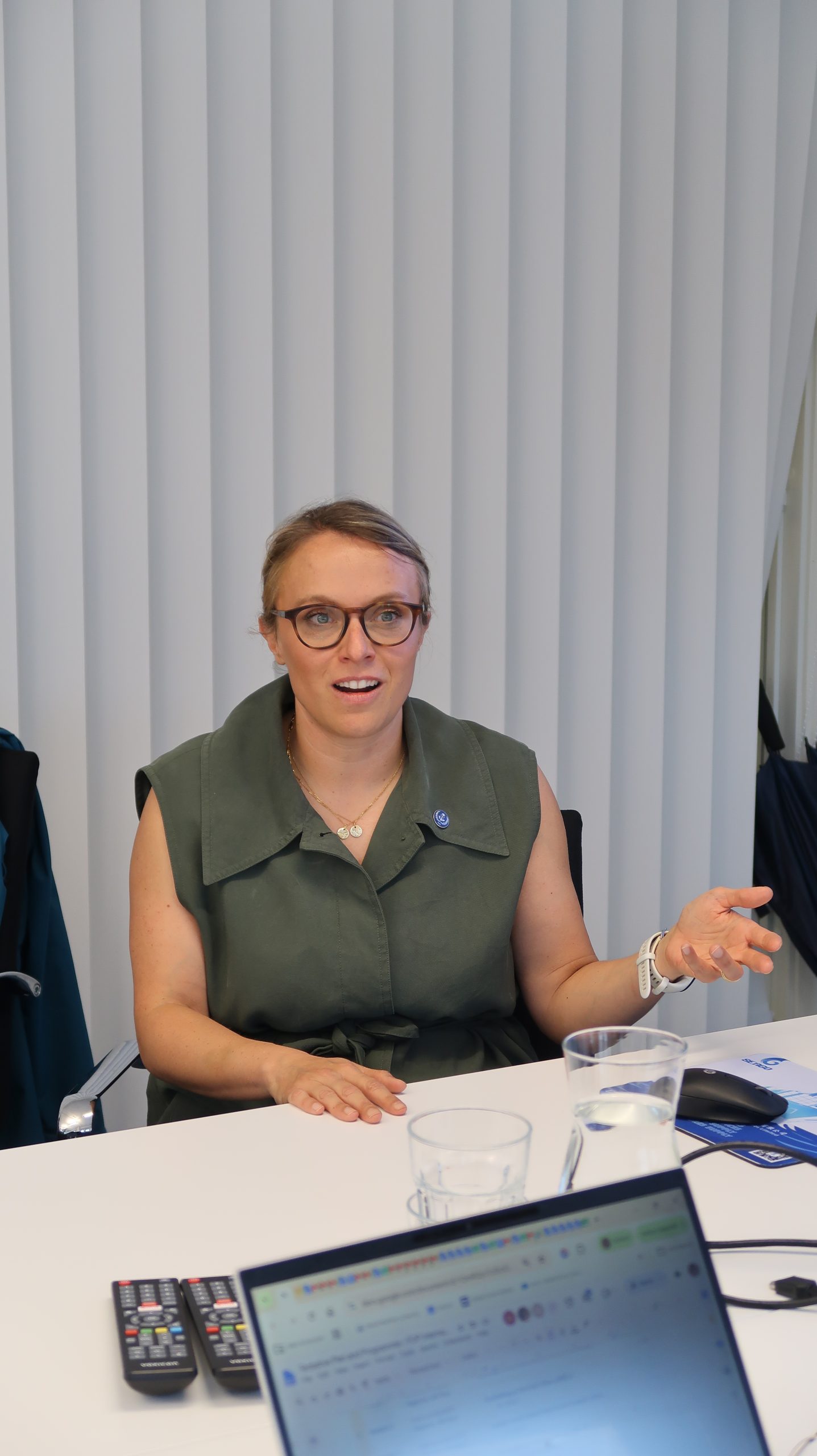
Subsequent sessions featured updates from the Programme’s remaining three research pillars. Discussions under pillar 2 explored the increasingly important role of non-state actors in ocean governance and decision-making processes, as well as ongoing contributions to the international negotiations on a global treaty to end plastic pollution. Especially the role of ocean literacy and youth engagement in international fora has been discussed and participants highlighted the tremendous importance of fair and equitable access to negotiation rooms for all.
Participants also reviewed progress on ocean observation and marine data governance, including efforts to scope a future Ocean-Based Observation (OBO) curriculum and establish expert working groups focused on ocean data and marine genetic resources under pillar 3. The Ocean Data Working Group has completed nine meetings as of today with the main focus on advancing the iterative development of the curriculum for ocean data for marine biodiversity. Besides, the progress with the work of the Marine Genetic Resources (MGR) Scientific Committee, aiming to raise awareness of the societal, ecological, and economic value of marine genetic resources, was presented.
The contribution of Pillar 3 in the chairmanship of the Sub-Committee on Education and Training (SCET) of GEBCO was underlined. The committee aims to raise awareness amongst academic institutions of gaps in education and training that may impact the progress and development of ocean mapping. The role of ocean observation technologies in this global effort has been underlined.
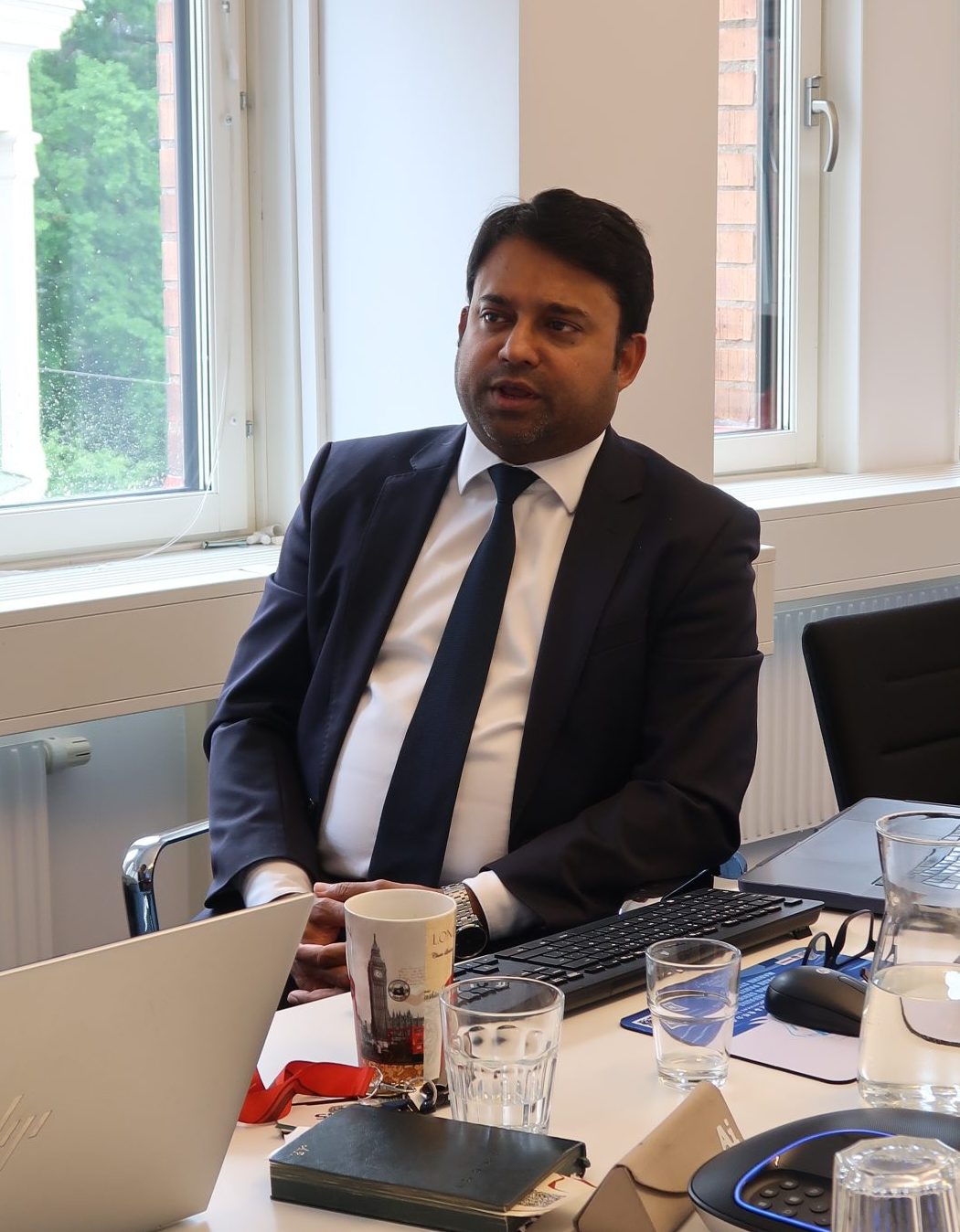
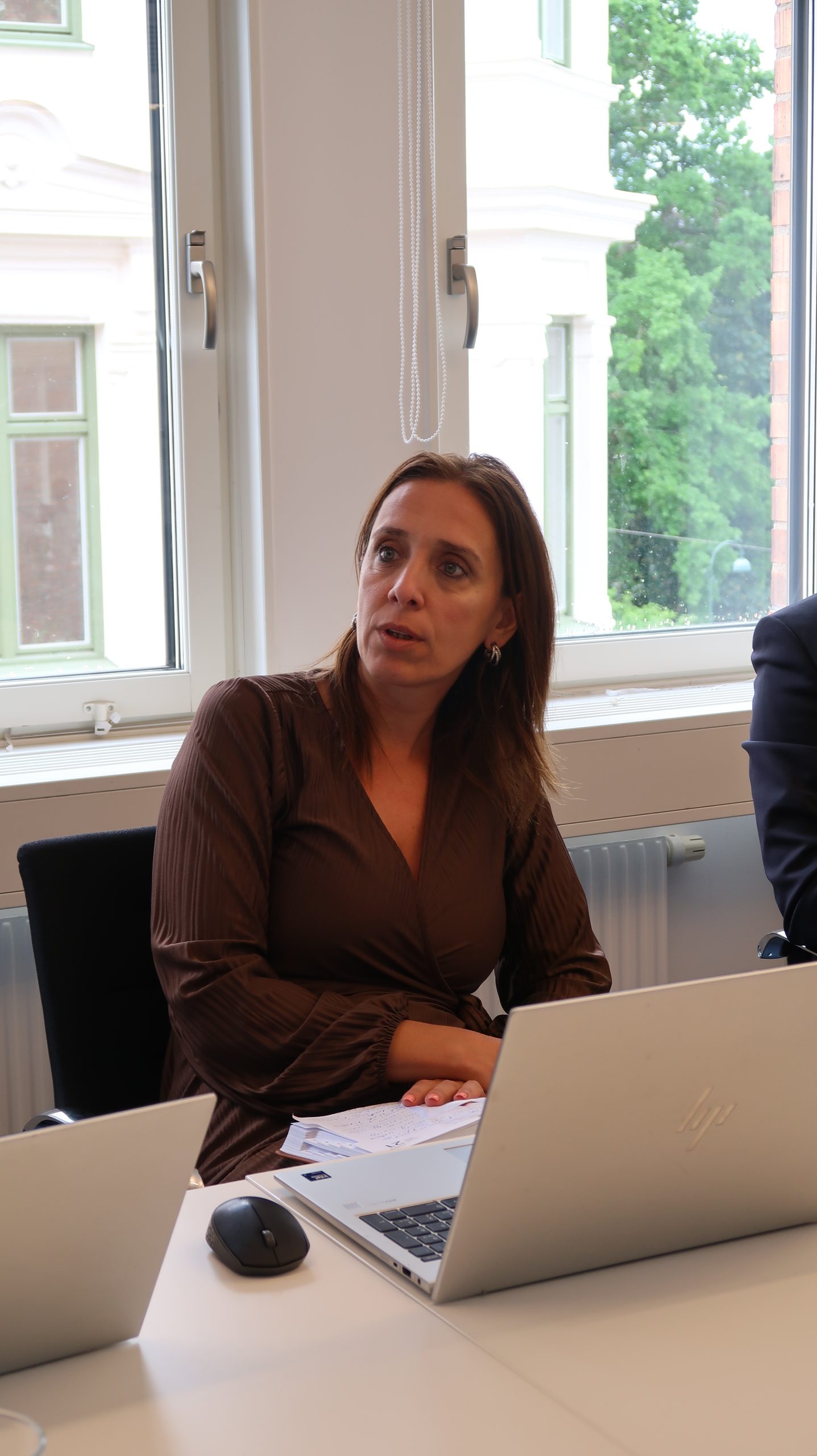
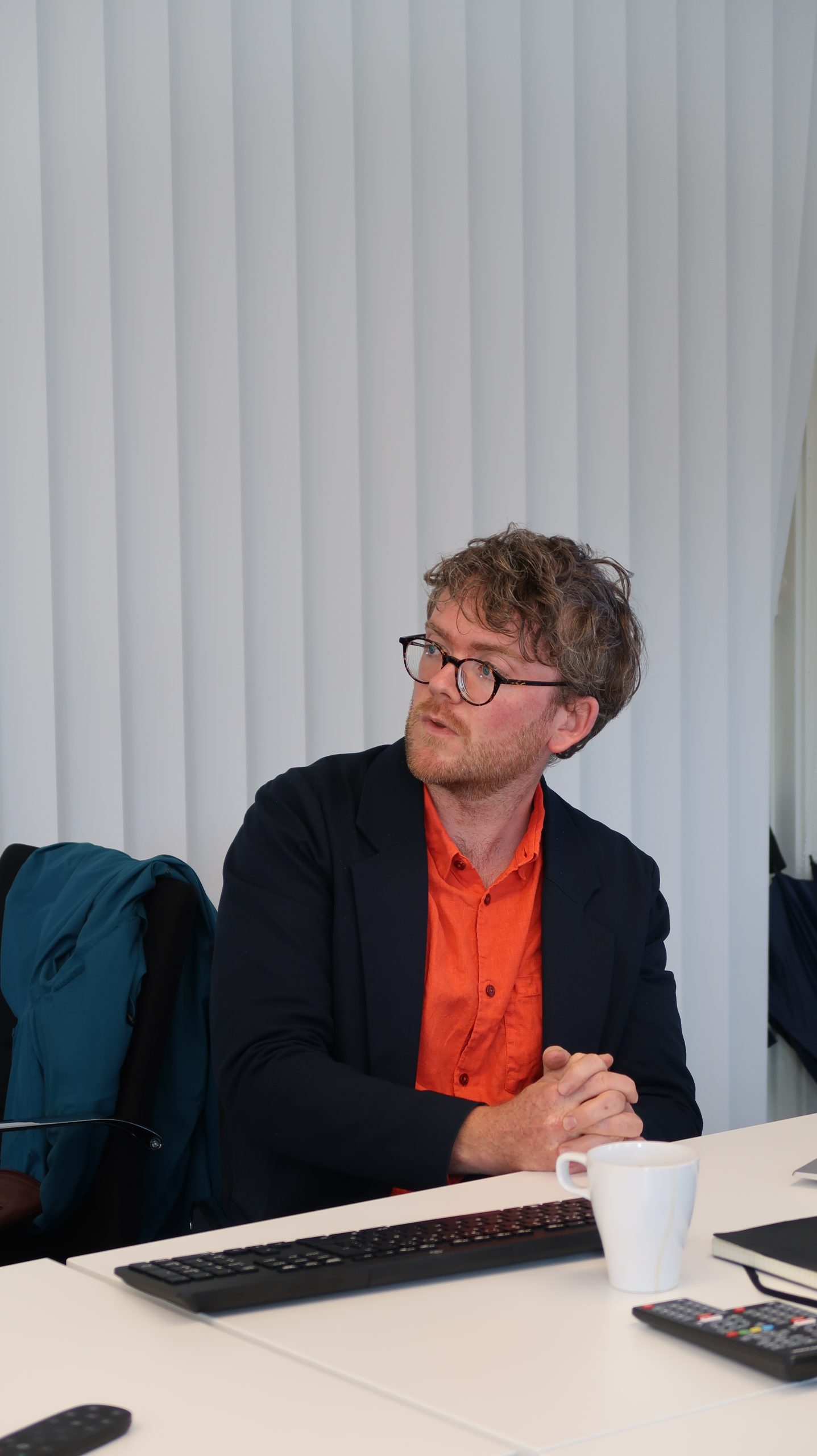
The workshop further examined the Programme’s work on the futures of ocean governance under pillar 4, highlighting the increasing interest in future modelling in decision-making contexts and giving momentum to the ongoing methodological work on future studies to develop scenarios for plausible futures for ocean governance. Discussions also highlighted the importance of the political economy of the BBNJ Agreement in building a sustainable and fairer ocean, exploring the linkages between the Agreement and broader environmental and multilateral governance frameworks.
The final session showcased the work of Future Ocean Programme PhD candidates, who presented updates on their doctoral research regarding the case studies of the Benguela Current Large Marine Ecosystem and the Saya de Malha Bank.
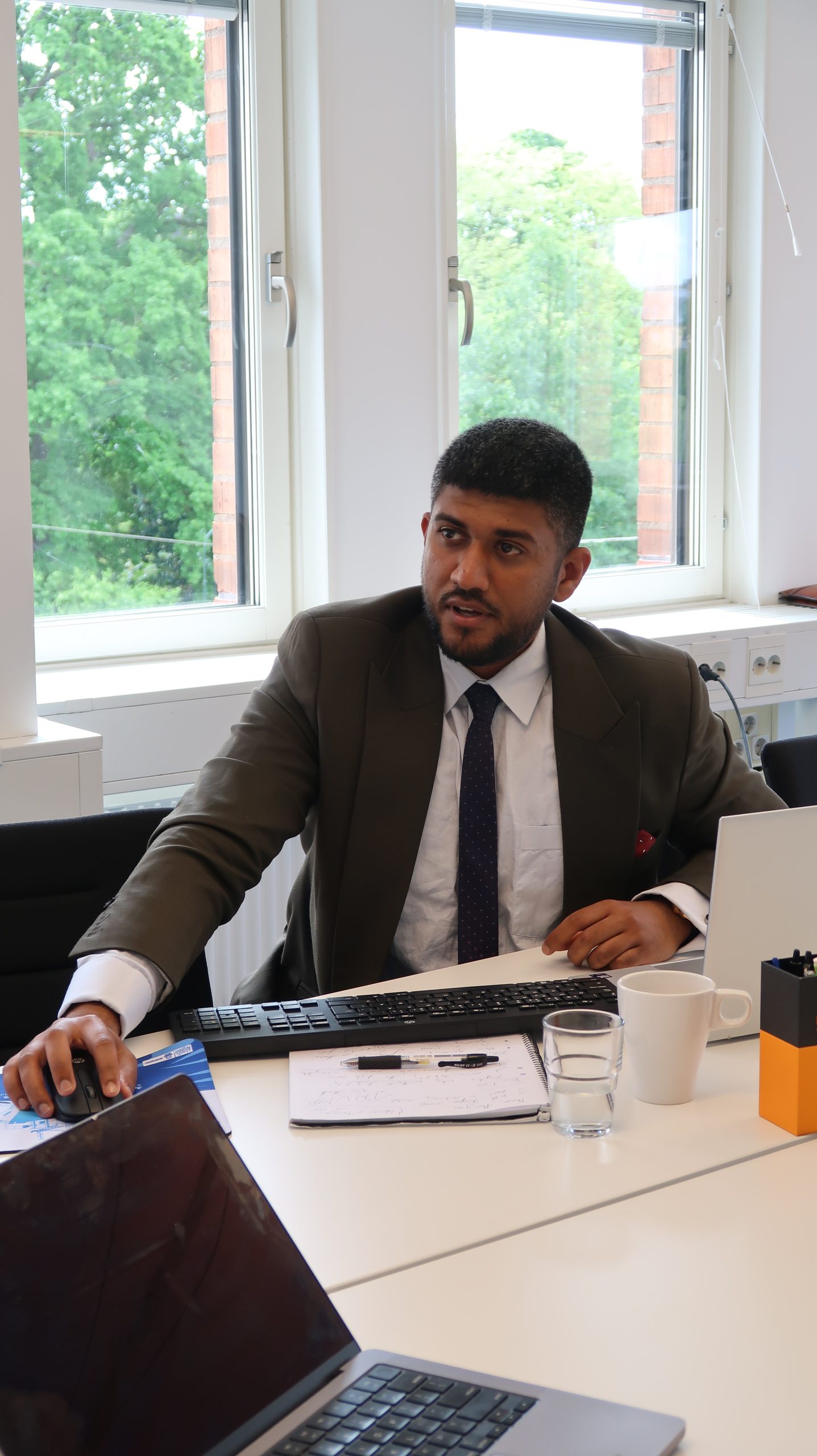
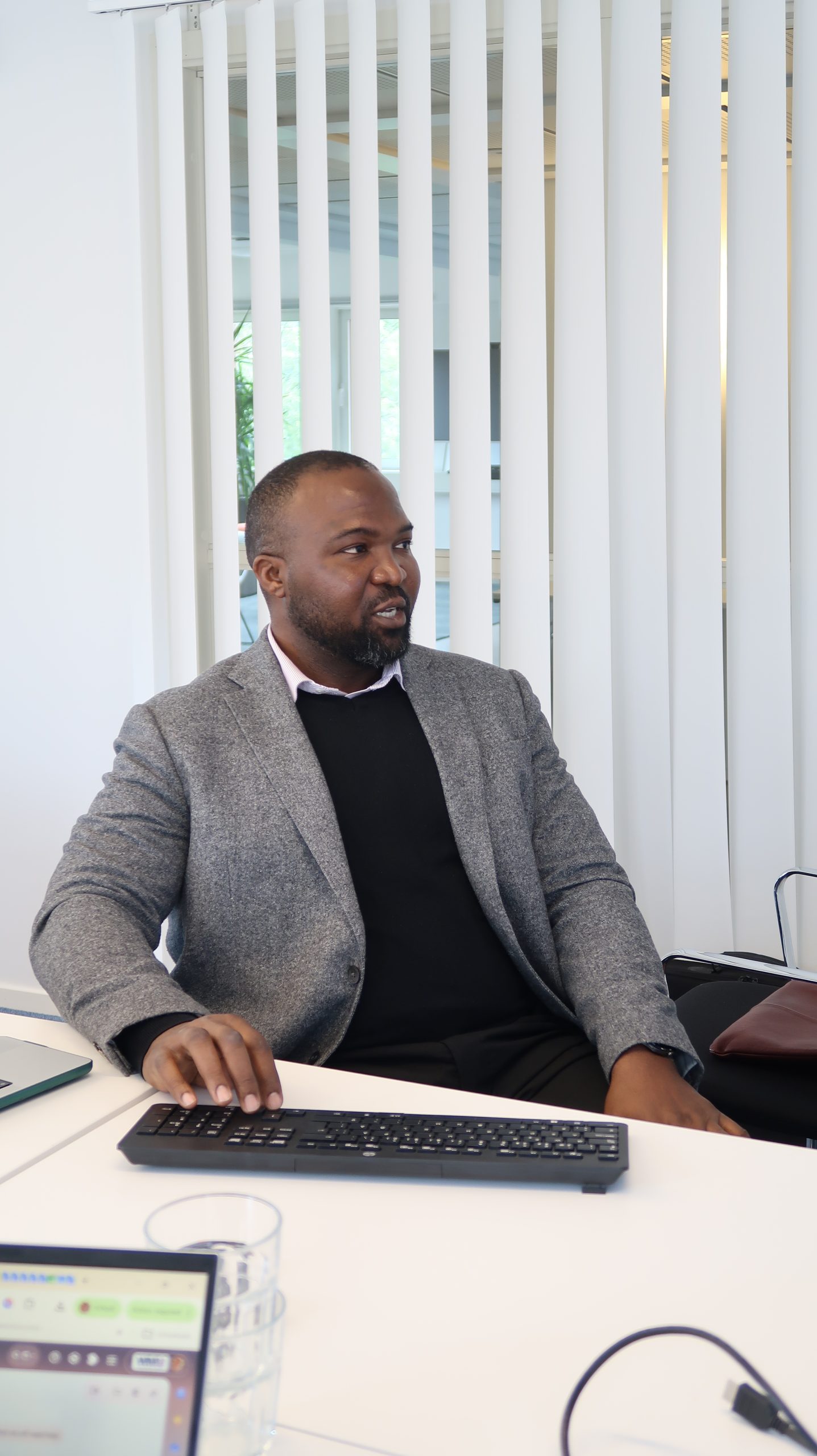
As the Future Ocean Programme entered its third year, the workshop played an important role in refining research priorities, strengthening collaboration across disciplines, and identifying opportunities for future publications, events, policy engagement, and outreach activities.
About the world maritime university
The World Maritime University (WMU) in Malmö, Sweden is established within the framework of the International Maritime Organization, a specialized agency of the United Nations. The mission of WMU is to be the world centre of excellence in postgraduate maritime and oceans education, professional training and research, while building global capacity and promoting sustainable development. WMU is an organization by and for the international maritime community and is committed to the United Nations Sustainable Development Goals Agenda.
About the wmu-sasakawa global ocean institute
The World Maritime University’s WMU-Sasakawa Global Ocean Institute (WMU-GOI) is an independent focal point for the ocean science-policy-law-industry-society interface where policymakers, the scientific community, regulators, industry actors, academics, and representatives of civil society meet to discuss how best to manage and use ocean spaces and their resources in accordance with the United Nations 2030 Agenda for Sustainable Development. The Institute was inaugurated in May 2018 and made possible through generous support from The Nippon Foundation of Japan, the Governments of Sweden, Canada, and Germany, as well as the City of Malmö
About the FUTURE OCEAN PROGRAMME
The Future Ocean Programme is funded by The Nippon Foundation and aims to generate knowledge and understanding of how law, political science, and public policy are used to effect change in humanity’s relationship with the ocean to combat the triple planetary crisis of biodiversity loss, climate change and pollution