
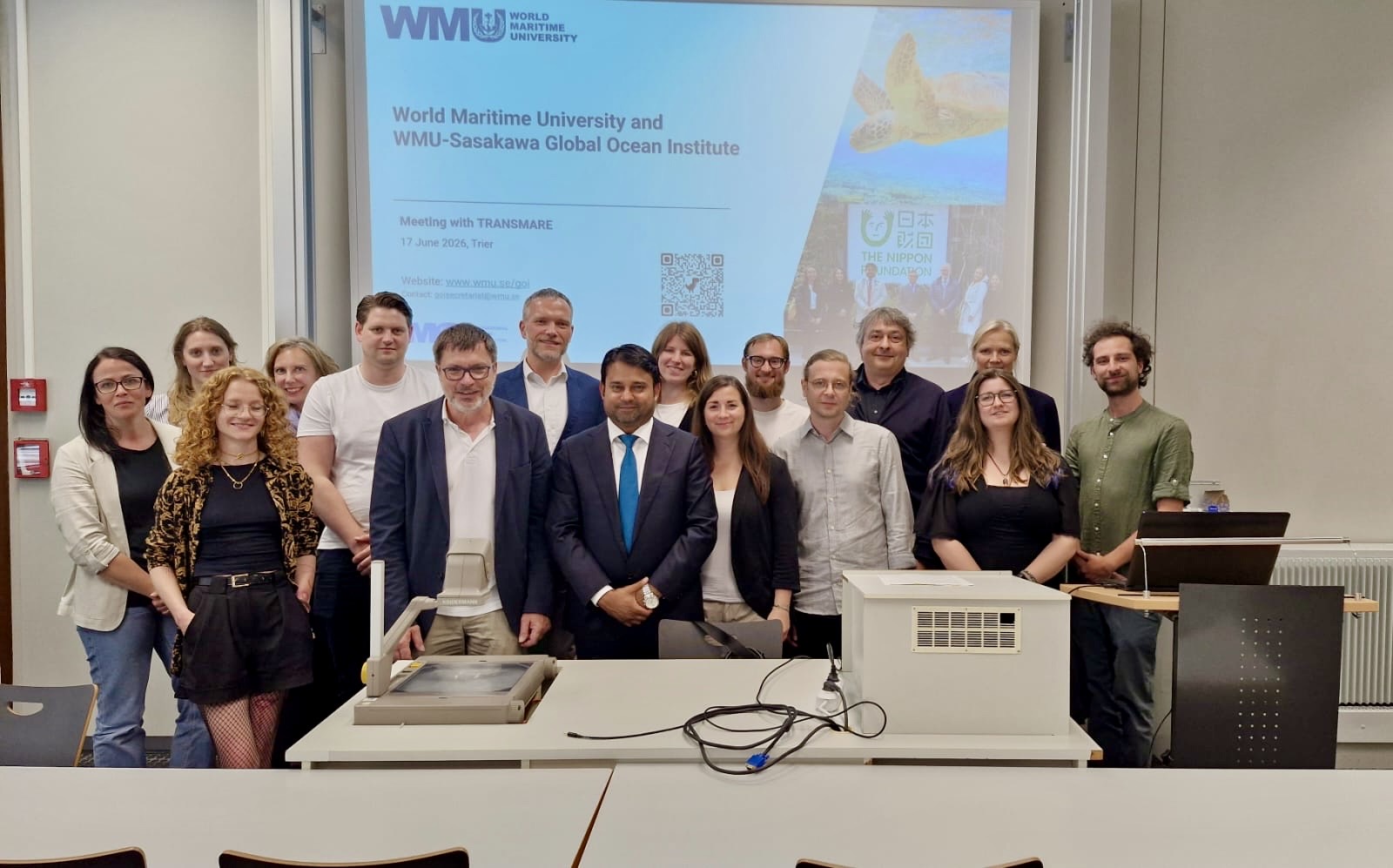
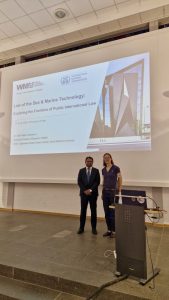
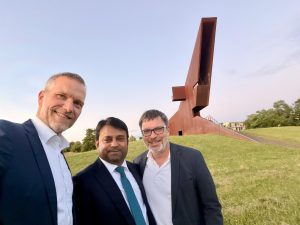
Dr. Tafsir Matin Johansson, Associate Professor at the World Maritime University (WMU)-Sasakawa Global Ocean Institute (GOI) participated in the Workshop “Law of the Sea and Marine Technology: Exploring the Frontiers of Public International Law”, held on 17-18 June 2026 at the University of Trier’s TRANSMARE-Institute in Germany.
Law of the Sea and Marine Technology
exploring the frontiers of public international law
about the workshop
Bringing together leading scholars and students, the workshop examined the rapidly evolving relationship between marine technology and the law of the sea. Discussions focused on international maritime zones, emerging technologies such as artificial intelligence and biologging, and the governance challenges arising from technological innovation in the marine environment.
about wmu-goi contributions
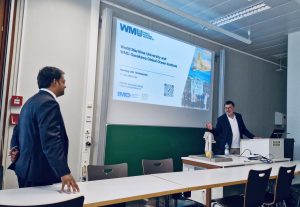
The programme continued with an evening workshop entitled “The World Maritime University, Maritime Law and Technology.” During this session, Dr. Johansson introduced participants to the World Maritime University (WMU), highlighting its establishment by the International Maritime Organization (IMO), a specialized agency of the United Nations, and its mission to advance maritime and ocean education, research, and capacity development worldwide. The workshop was chaired by Professor Dr. Christoph Schäfer from the Department of Ancient History.
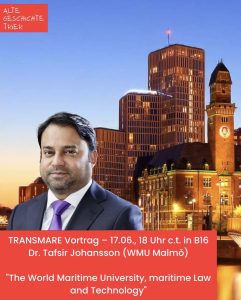
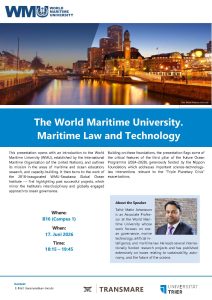
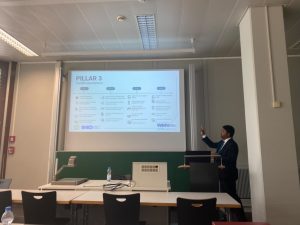
Dr. Johansson also presented the work of the WMU-Sasakawa Global Ocean Institute (WMU-GOI), showcasing its interdisciplinary approach to ocean governance and highlighting several successful research initiatives that have contributed to international policy development and capacity-building efforts across multiple regions. Particular attention was given to the Future Ocean Programme (2024–2028), generously funded by The Nippon Foundation. He outlined key aspects of the Programme’s third research pillar, which explores critical intersections between science, technology, and law, with a focus on addressing challenges associated with the escalating impacts of the “Triple Planetary Crisis” of climate change, biodiversity loss, and pollution.
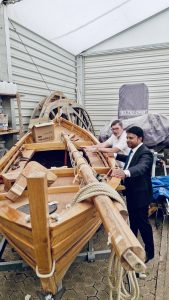
Looking ahead, Dr. Johansson has committed to advancing collaborative techno-regulatory research with Professors Thomas Ellwart and Christoph Schäfer through an annually organized workshop at the University of Trier entitled T3: Time, Techno-Regulation and Teamwork. The initiative will explore the nexus between retrospective and foresight-oriented examinations of ancient and modern maritime and ocean technologies, while also examining the role of psychology in shaping innovation, governance, and technological adaptation across time.
For more information please contact the WMU-GOI at goisecretariat@wmu.se
About the World Maritime University
The World Maritime University (WMU) in Malmö, Sweden is established within the framework of the International Maritime Organization, a specialized agency of the United Nations. The mission of WMU is to be the world centre of excellence in postgraduate maritime and oceans education, professional training and research, while building global capacity and promoting sustainable development. WMU is an organization by and for the international maritime community and is committed to the United Nations 2030 Agenda for Sustainable Development.
About wmu-goi
The World Maritime University (WMU)-Sasakawa Global Ocean Institute (GOI) is an independent focal point for the ocean science-policy-law-industry-society interface where policymakers, the scientific community, regulators, industry actors, academics, and representatives of civil society meet to discuss how best to manage and use ocean spaces and their resources in accordance with the United Nations 2030 Agenda for Sustainable Development. The Institute was inaugurated in May 2018 and made possible through generous support from The Nippon Foundation of Japan, the Governments of Sweden, Canada, and Germany, as well as the City of Malmö.